
You need to select Galvanized white smoke extraction equipment that matches your welding process, workspace, and safety requirements. Breathing fumes from galvanized welding can cause serious health issues. Many welders experience metal fume fever, which brings fever, chills, and muscle aches. You might notice headaches, a metallic taste, or chest tightness after working without proper extraction. About 30% of middle-aged welders have had metal fume fever at least once. Using the right extraction system helps you avoid these risks and keeps your work environment safe.
Key Takeaways
- Select smoke extraction equipment based on your welding process and workspace size to ensure safety and efficiency.
- Always use high-efficiency filters, like HEPA, to capture harmful zinc fumes and protect your health.
- Regularly check and maintain your extraction system to ensure it operates effectively and meets safety standards.
- Consider the frequency and duration of your welding jobs when choosing between portable and fixed extraction systems.
- Stay informed about OSHA regulations and ensure your equipment complies to avoid health risks and legal issues.
Why Extraction Is Essential for Galvanized Welding
Health Risks of Zinc Fumes
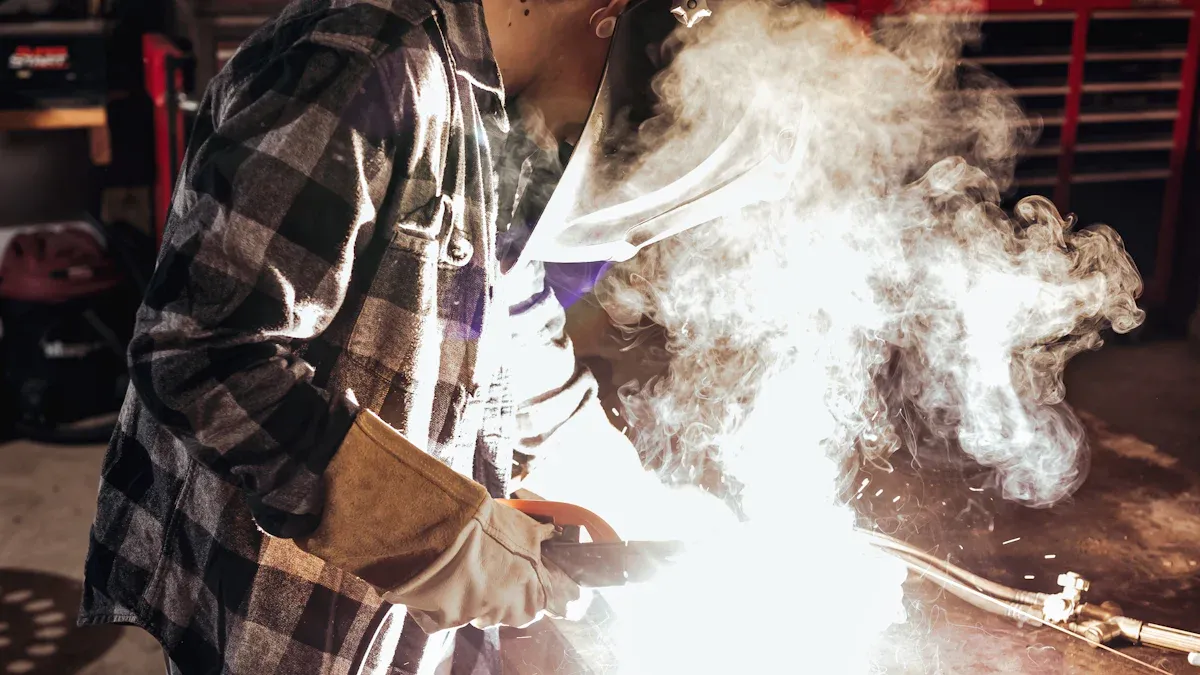
When you weld galvanized steel, you create zinc oxide fumes. These fumes can cause serious health problems. You might feel sick with fever, chills, and muscle aches. Doctors call this metal fume fever. If you breathe these fumes often, you can develop long-term lung problems. Some welders get chronic coughs, chest illnesses, or even diseases like COPD and occupational asthma. You may also face a higher risk of lung cancer, kidney damage, and nervous system disorders.
Tip: Always use proper ventilation and respiratory protection when welding galvanized steel.
Here is a table that shows the dangers of zinc fumes:
| Illness / Fume Type | Cause / Source | Symptoms / Effects | Risk Nature | Long-term Severity |
|---|---|---|---|---|
| Metal Fume Fever | Zinc fumes from galvanized steel | Flu-like symptoms: fever, chills, muscle aches, nausea | Acute, short-term | Can lead to chronic respiratory problems |
High levels of zinc exposure can also interfere with copper in your body. This can lead to confusion, memory problems, and trouble with coordination. If you work with galvanized steel often, you need to protect yourself from these risks.
Safety and Compliance Standards
You must follow safety rules to keep your workspace safe. The Occupational Safety and Health Administration (OSHA) sets limits for zinc oxide fumes. OSHA says you should not breathe more than 5 mg/m³ of zinc oxide fume in the air.
| Substance | OSHA PEL |
|---|---|
| Zinc Oxide | 5 mg/m³ for fume |
To meet these standards, you need to use Galvanized white smoke extraction equipment that captures fumes at the source. You should also prepare your welding area by removing as much of the galvanized coating as possible. Good extraction equipment helps you stay within safe limits and avoid health problems. You protect yourself and your coworkers when you follow these rules.
Types of Galvanized White Smoke Extraction Equipment
Choosing the right Galvanized white smoke extraction equipment depends on your welding process, workspace, and how often you weld. You need to know the main types of extraction systems and how they fit your needs.
Portable Fume Extractors
Portable fume extractors work well in small workshops or for jobs that move around. You can roll them to different workstations. These units pull fumes directly from the welding area and filter out harmful particles. If you weld in different spots or have a small shop, you will find portable extractors very useful.
Here is a table that shows the advantages and disadvantages of portable fume extractors:
| Advantages | Disadvantages |
|---|---|
| Flexibility and ease of movement | Limited processing capacity (1-2 welding points) |
| Effective against submicron particles | Higher noise levels compared to centralized systems |
| Can serve multiple workstations | Requires attention to filter saturation and maintenance |
You should use portable extractors for short welding jobs, repairs, or when you need to move equipment often. They work best for MIG, TIG, or stick welding on small parts. You must check the filters often and replace them when they get full.
Tip: If you need to weld in different places, choose a portable extractor for maximum flexibility.
Wall-Mounted and Fixed Systems
Wall-mounted and fixed systems suit larger workshops or permanent welding stations. You install these units in one place, usually near the welding area. They handle fumes from several workstations at once. These systems often use extraction arms or hoods to capture smoke right at the source.
You should pick wall-mounted systems if you weld for long periods or have a busy shop. These systems work well for continuous MIG or TIG welding. They also reduce noise compared to portable units. Fixed systems need more planning and installation, but they offer strong and steady performance.
Note: Wall-mounted systems are best for large jobs or when you want to keep your workspace organized.
Filter Types and Airflow
The filter type and airflow rate are key parts of Galvanized white smoke extraction equipment. You must match the filter to the amount of smoke and the size of your workspace. Most extractors use HEPA or activated carbon filters. HEPA filters trap tiny particles, while carbon filters remove odors and gases.
You need to check the airflow, measured in cubic feet per minute (CFM). The right CFM depends on your welding process and the size of your extraction arm or hood. Here is a table with recommended CFM rates for different welding methods:
| Welding Process | Recommended CFM Range |
|---|---|
| MIG Welding | 100 CFM (standard gun), 200 CFM (3-inch arm), 600 CFM (6-inch arm) |
| TIG Welding | 80-150 CFM |
| Stick Welding | 80-150 CFM |
If you use fume extraction arms, you will see airflow rates from 560 to 860 CFM. You should make sure your fans and filters match your power supply. Variable-speed fans help you save energy and adjust to your needs. Automatic controls can turn on extraction only when you weld. High-efficiency motors work best for long jobs.
Alert: Always check the filter type and airflow before you buy Galvanized white smoke extraction equipment. The right setup keeps your air clean and your team safe.
You can use portable extractors for small jobs and wall-mounted systems for bigger spaces. Always match the filter and airflow to your welding process. This way, you get the best protection from harmful fumes.
Assessing Workspace & Welding Process
Workspace Size and Layout
You need to look at your workspace before choosing any smoke extraction system. The size and shape of your shop will change what equipment works best. Large spaces need longer duct runs and stronger fans to pull fumes away from the welding area. If your shop has a complex layout, you may need more than one extraction point or a custom setup. High ceilings can make installation harder and may increase costs because you might need extra supports or retrofitting.
Here is a table to help you see how these factors affect your choice:
| Factor | Impact on Equipment Selection |
|---|---|
| Workspace Size | Needs longer ducts and stronger fans for good suction |
| Layout | May need multiple extraction points or custom setups |
| Ceiling Height | Can raise installation costs due to extra retrofitting |
Tip: Measure your workspace and note any obstacles before you buy Galvanized white smoke extraction equipment.
Welding Duration and Frequency
How often and how long you weld also matters. If you use high-volume processes like Flux Core welding, you need a more powerful extraction system. Confined spaces often need fixed systems, while large open areas can use a mix of ventilation types. If you move around a lot, portable units may work better.
- High-volume welding needs strong extraction.
- Confined spaces do best with fixed systems.
- Large shops may need both fixed and portable units.
- If you weld all day, choose a continuous fume extractor.
- For short, manual jobs, portable extractors are enough.
Alert: Always match your extraction system to your welding schedule and movement needs.
Matching Equipment to Application
You must match your extraction equipment to your welding process. MIG welding works best with high vacuum systems that pull fumes right at the source. TIG and stick welding may need different setups. The type of metal also matters. For example, aluminum welding creates aluminum oxide, which portable or wall-mounted extractors can handle. Stainless steel welding makes dangerous fumes like hexavalent chromium, so you need HEPA and carbon filters. Carbon steel welding produces iron oxides, which require cartridge filters.
HEPA filters trap tiny particles, and carbon filters absorb harmful gases. Flexible extraction arms help you place the suction close to the weld, making the system more effective.
Note: Always check the filter type and extraction method for your welding process and metal type.
Key Features to Prioritize
Filter Efficiency and Compatibility
You need to focus on filter efficiency when choosing Galvanized white smoke extraction equipment. Filters with a minimum efficiency reporting value (MERV) of 15 or 16 work best for capturing hazardous fumes. These filters trap fine metal particles and help keep your air safe. You should check if the filter matches your welding process and the type of fumes you create. Disposable filters, like N95 or P100, work for short jobs and need replacement after each shift or if damaged. Cartridge filters last longer and you should replace them when breathing becomes harder. For busy shops, self-cleaning units can save time and reduce filter changes.
| Filter Type | When to Replace | Best Use Case |
|---|---|---|
| Disposable N95/P100 | After 1 shift or if damaged | Short jobs, quick changes |
| Cartridge | When breathing gets harder | Longer jobs, heavy use |
| Self-cleaning | As needed, less often | High-volume, continuous use |
Tip: Always choose filters with high efficiency for galvanized welding. This keeps you and your team safe from dangerous fumes.
Airflow (CFM) and Power
Airflow, measured in cubic feet per minute (CFM), affects how well your system removes fumes. You need to match the airflow to your welding process and workspace size. Articulated arms need 600 to 900 CFM. Cross draft ventilation works best at 1,000 CFM or higher for small booths. OSHA recommends at least 2,000 CFM per welder unless you use local exhaust systems. Movable hoods need airflow between 150 and 600 CFM, depending on how close they are to the weld.
| Extraction Method | Airflow Rate (CFM) | Notes |
|---|---|---|
| Articulated Arms | 600 – 900 | Low vacuum, saves power |
| Cross Draft Vent | 1,000+ | Good for small booths and parts |
Alert: Always check the CFM rating before you buy. The right airflow keeps your air clean and meets safety rules.
Mobility and Maintenance
You should think about how easy it is to move and maintain your extraction equipment. Portable units work well if you move between jobs. Fixed systems suit permanent workstations. Maintenance keeps your system working well. For heavy use, replace pre-filters every 2–4 weeks, main filters every 3–6 months, and carbon filters every 2–3 months. With good care, filters can last 10–15 years. Fan housings and ductwork can last for decades.
- Portable units: Easy to move, need regular filter checks.
- Fixed systems: Less movement, longer service life.
- Self-cleaning units: Lower maintenance, good for busy shops.
Note: Regular maintenance helps your equipment last longer and keeps your workspace safe.
Safety, Compliance, and Maintenance
Meeting OSHA and Local Codes
You must follow strict rules when you weld galvanized steel. OSHA and local codes protect you from harmful fumes. These rules set limits for zinc oxide exposure and require you to use proper extraction systems. You need to check air quality often and keep records of your safety training. You also must repair any coating you remove during welding. The table below shows the main requirements you should know:
| Requirement | Description |
|---|---|
| Permissible Exposure Limit (PEL) | 5 mg/m³ as an 8-hour time-weighted average for zinc oxide fumes |
| Air Quality Monitoring | Check exposure levels during coating removal and welding |
| Medical Surveillance | Provide health checks for workers with regular zinc fume exposure |
| Engineering Controls | Use ventilation and extraction as your main protection |
| Safety Training Documentation | Keep records of training on galvanized steel hazards and coating removal |
| AWS Standards | Remove coatings 1-4 inches from weld zones |
| Repair Procedures | Fix galvanized coatings after welding (per ASTM A780) |
Alert: Always keep your documentation up to date. Inspectors may ask for proof of compliance at any time.
Safe Operation and Training
You need proper training to use smoke extraction equipment safely. Training helps you understand the hazards and teaches you how to protect yourself. You should learn about safe work practices, personal protective equipment, and facility rules. You must also get special training when you use new equipment or welding methods. Refresher courses help you remember safety steps and learn about new risks.
- Start with training on welding hazards and safe work practices.
- Learn how to choose and use the right PPE.
- Get process-specific training for new equipment.
- Take refresher courses to stay updated.
- Keep your head out of the fume plume.
- Make sure you have good ventilation for every weld.
- Use extra controls for stainless steel, hardfacing, and galvanized materials.
- Stand upwind when you weld outdoors.
- Use strong local exhaust when welding galvanized coatings.
Tip: Good training keeps you safe and helps you avoid mistakes.
Routine Maintenance
You must keep your extraction equipment in good shape to stay safe and meet regulations. Regular checks and cleaning help your system work well. You should test your local exhaust ventilation at least every 14 months. Keep records of all maintenance and risk assessments. Train everyone who uses the equipment so they know how to spot problems. Plan to replace or upgrade your system when needed.
- Clean or replace filters often.
- Check airflow and inspect ducts regularly.
- Test your extraction system every 14 months.
- Keep logs of all maintenance and inspections.
- Train operators to use the system correctly.
- Update or replace equipment to meet new standards.
Note: Routine maintenance protects your health and keeps your shop running smoothly.
You can choose the right smoke extraction equipment for galvanized welding by following these steps:
- Assess your workplace. Look at the size, welding types, and fume levels.
- Analyze product specifications. Check the filtration capacity and make sure it fits your needs.
- Consider long-term solutions. Pick modular systems that grow with your shop.
- Always use HEPA filters to meet safety codes and capture zinc fumes.
Tip: For complex setups, talk with an equipment specialist before you decide.
FAQ
What is the most important feature in smoke extraction equipment for galvanized welding?
You should focus on filter efficiency. High-efficiency filters, like HEPA, trap dangerous zinc fumes. This keeps your air clean and protects your health.
How often should you replace filters in your fume extractor?
Check filters every month. Replace disposable filters after heavy use or when airflow drops. Cartridge filters last longer but need changing when breathing becomes harder.
Can you use one extractor for different welding processes?
Yes, you can use one extractor for MIG, TIG, and stick welding. Make sure the airflow and filter type match each process. Adjust settings as needed.
Do you need special training to use smoke extraction equipment?
You need basic training before using any extraction system. Training helps you spot problems, use equipment safely, and follow safety rules.
Post time: Apr-20-2026