
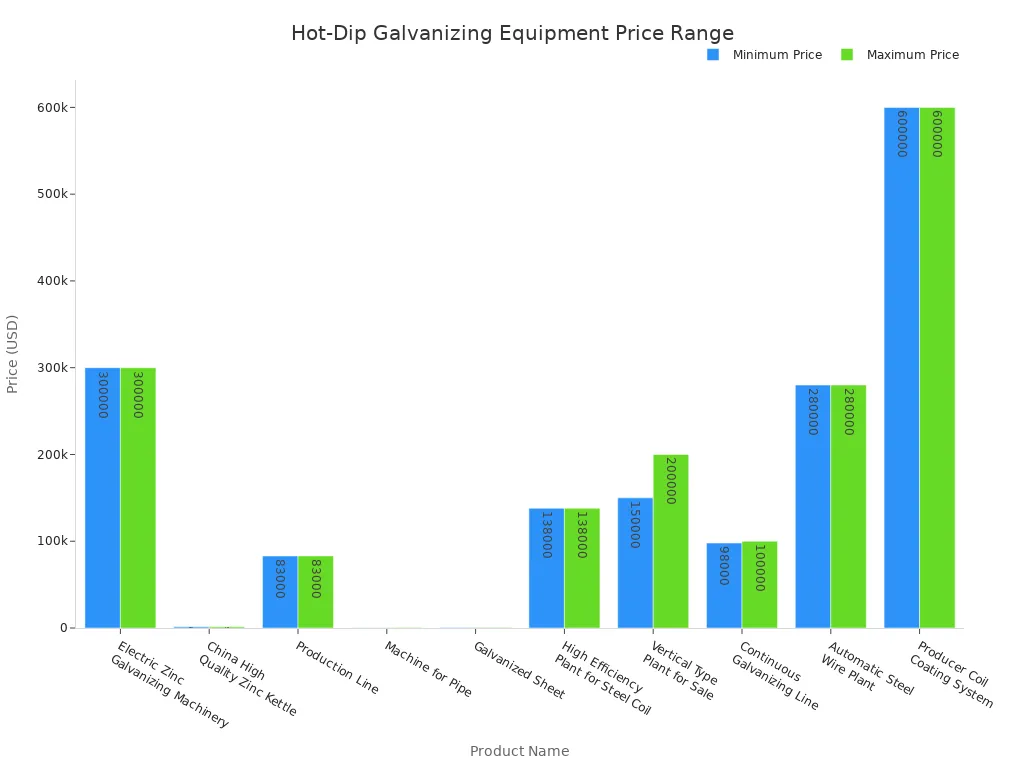
You can expect the price of hot-dip galvanizing equipment to vary greatly. For example, machinery prices range from $380 to $600,000. The table below shows recent market data:
| Product Name | Price Range |
|---|---|
| Hot Dip Galvanizing Machine for Pipe | $380-600 |
| Hot Dip Galvanizing Equipment Production Line | $83,000 |
| Vertical Type Hot Dip Galvanizing Plant for Sale | $150,000-200,000 |
| Hot DIP Galvanizing Machine Producer Coil Coating System | $600,000 |
You should know that the upfront cost is high, but you save money over time because galvanized steel needs little maintenance.
Key Takeaways
- Hot-dip galvanizing equipment costs vary widely, from $380 for small machines to over $600,000 for advanced systems. Plan your budget based on your production needs.
- Consider all cost components, including equipment, civil construction, labor, and operating costs. Each part affects your total investment.
- Investing in hot-dip galvanizing offers long-term savings. Galvanized steel lasts up to 40 years with minimal maintenance, reducing overall costs.
- Use online calculators to estimate costs and compare hot-dip galvanizing with other methods. This helps you make informed decisions.
- Consult industry experts for tailored advice. Their insights can help you choose the right equipment and avoid costly mistakes.
Hot-dip galvanizing equipment costs
Price range overview
You can find a wide range of prices when you look for hot-dip galvanizing equipment. Small machines start at about $5,000. Large industrial machinery can cost up to $250,000. If you want to build a full production line, you may need to invest between $1 million and $3 million. The size of the kettle also affects the price. Each foot of kettle length can cost around $100,000. These numbers help you see how much your project might cost, whether you plan a small workshop or a large factory.
Tip: You should always check the latest market prices before making a decision. Prices change based on demand and technology.
Main cost components
When you buy hot-dip galvanizing equipment, you pay for more than just the machines. You need to consider several main cost components. The table below shows what you should expect:
| Cost Component | Description |
|---|---|
| Equipment Cost | Kettle, furnace, tanks, handling systems |
| Civil Construction | Workshop, foundation, infrastructure |
| Labor & Installation | Local construction and installation workforce |
| Operating Cost | Zinc consumption, Energy (gas/electricity), Chemicals |
You must plan for each part. Equipment cost covers the machines and tools. Civil construction includes the building and foundation. Labor and installation pay for workers who set up the equipment. Operating cost covers materials and energy used during production.
Example investments
You can see how companies invest in hot-dip galvanizing equipment by looking at real-world examples:
- ThyssenKrupp Steel invested over a quarter of a billion euros in a new hot dip galvanizing line in Dortmund. This line can produce 600,000 metric tons per year.
- Small workshops often spend less than $100,000 for basic machinery and setup.
- Medium-sized plants may invest between $500,000 and $2 million for a complete system.
These examples show the difference between small-scale and large-scale investments. If you run a small business, you may only need a simple machine. Large factories require full production lines and advanced systems. You should match your investment to your production needs.
Factors affecting cost
Equipment size and capacity
When you choose hot-dip galvanizing equipment, the size and capacity matter a lot. You need equipment that matches the amount of material you plan to galvanize. If you pick equipment that is too small, you may face delays and higher costs because you cannot process enough material at once. If you choose equipment that is too large, you might waste energy and money on unused capacity. Energy efficiency and maintenance also play a big role in the total cost. Larger machines often use more energy and may need more upkeep.
- The right size helps you avoid extra expenses.
- Proper capacity ensures smooth production.
- Energy-efficient machines can lower your bills over time.
Project complexity
Project complexity can change the price of your investment. If you want automation, you can improve coating quality and even save up to 20% on zinc use. Automated lines need special systems to move materials, which can add to the cost. If your project involves large or custom structures, you may need special facilities or equipment. This can make your project more expensive, but it can also help you meet unique needs.
- Automation can save money but increases upfront costs.
- Custom projects may need special equipment or buildings.
- Integration with your current systems can affect the total price.
Local market pricing
Where you buy and install your equipment also affects the cost. The price of zinc, energy, and demand in your area can change how much you pay. For example, in Europe, rising energy prices have made it more expensive to run galvanizing plants. Countries like Germany and France have high demand for galvanized products, which can push prices up. In Italy, changes in zinc and energy prices make it hard for companies to keep costs steady. You should always check local prices and market trends before making a decision.
Note: Choosing high-quality materials and trusted suppliers can help your equipment last longer and work better. This can save you money in the long run, even if the initial investment is higher.
Cost comparison
Other corrosion protection methods
When you look at ways to protect steel from rust, you will find several options. The most common alternatives to hot-dip galvanizing equipment are paint systems and electroplating. Each method has its own costs and benefits. You can see the differences in the table below:
| Technology | Cost Over 20-25 Years | Durability |
|---|---|---|
| Hot-Dip Galvanizing | Lower | Maintenance-free life |
| Paint Systems | 70% more | Requires regular maintenance |
If you compare the long-term costs, hot-dip galvanizing stands out as the most economical choice. For example, the cost per square foot for hot-dip galvanizing is $4.29, while paint and other coatings can be much higher. The table below shows how much you might spend on different systems:
| Coating System | $/ft² | Total Cost |
|---|---|---|
| Hot-Dip Galvanizing | $4.29 | $214,500 |
| Galvanizing/Epoxy/Polyurethane (Duplex) | $22.84 | $1,142,000 |
| Inorganic Zinc/Epoxy | $39.92 | $1,996,000 |
| Inorganic Zinc/Epoxy/Polyurethane | $41.53 | $2,076,500 |
| Epoxy/Epoxy | $51.91 | $2,595,500 |
| Epoxy/Polyurethane | $61.63 | $3,031,500 |
| Metallizing | $62.80 | $3,140,000 |
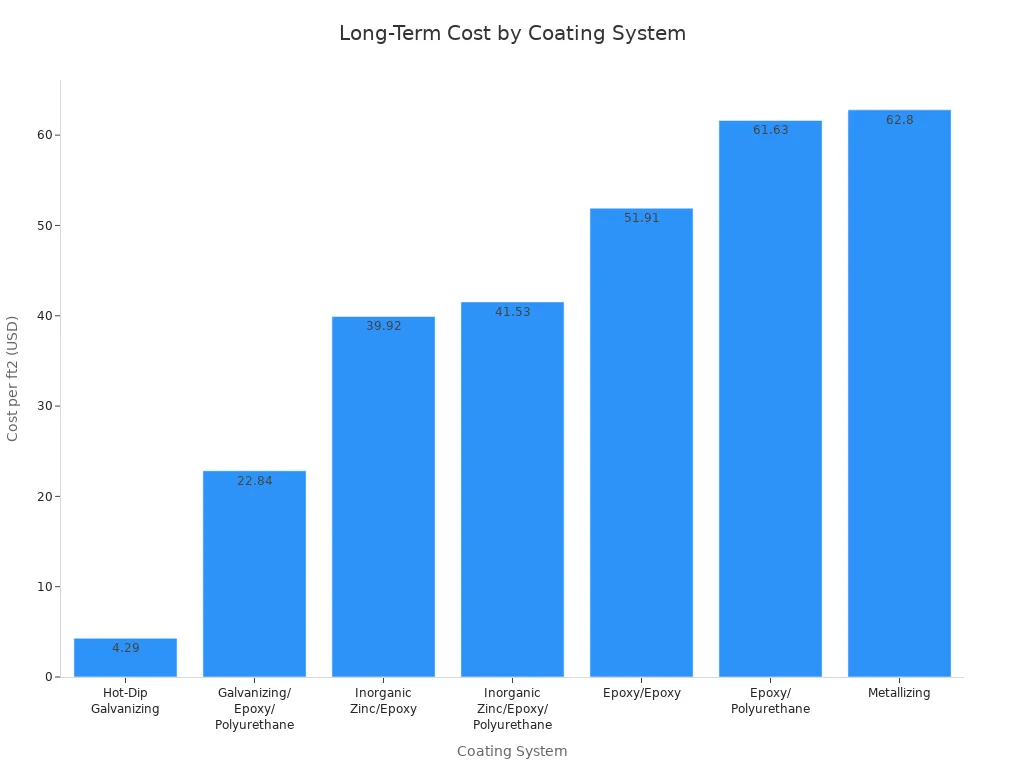
You will also notice that hot-dip galvanizing needs less maintenance. Even if you add one maintenance cycle near the end of a project’s life, it still costs less than other methods.
Application scenarios
You should choose hot-dip galvanizing when you want to save money over time. Here are some situations where it works best:
- You want lower initial costs compared to other protection methods.
- You need steel that lasts a long time without much upkeep.
- You want to avoid extra inspection or maintenance fees.
Many industries use hot-dip galvanizing equipment because it offers the best value. The table below shows where you will see the most benefits:
| Industry/Project | Application Description |
|---|---|
| Wind Turbines | Galvanized parts stand up to harsh weather. |
| Solar Panel Frames | Keeps solar installations strong and long-lasting. |
| Automotive Industry | Protects car bodies and parts from rust. |
| Agriculture | Farm tools, fences, and silos last longer outdoors. |
| Marine and Coastal Environments | Structures resist saltwater corrosion. |
| Utilities and Telecommunications | Poles and towers stay strong for power and communication lines. |
You can see that hot-dip galvanizing equipment gives you the best results when you need strong, long-lasting protection with low maintenance.
Long-term value
Maintenance and durability
You gain long-term benefits when you choose hot-dip galvanizing equipment. Galvanized steel lasts up to 40 years without failure, while painted steel needs repainting every 5 to 10 years. This means you spend less time and money on maintenance. Direct maintenance costs can reach two to five times the initial project cost. Indirect costs may climb even higher, sometimes up to eleven times the direct costs. You avoid these expenses by using galvanized steel, which needs minimal upkeep.
| Method | Lifespan without Failure | Maintenance Frequency |
|---|---|---|
| Galvanized Steel | 40 years | Minimal maintenance required |
| Painted Steel | 5-10 years | Periodic repainting needed |
Hot-dip galvanizing leads to lower life-cycle costs. You can allocate your funds to new projects instead of ongoing repairs. The corrosion protection stays strong for decades, so you do not worry about frequent maintenance. This simplicity makes it easier for you to manage operational expenses.
- You save money on maintenance.
- You reduce downtime and interruptions.
- You simplify budgeting for future projects.
Return on investment
You see economic benefits over time with hot-dip galvanizing equipment. Lower maintenance needs mean you spend less on repairs and replacements. The long-lasting protection helps you avoid unexpected costs. You also meet strict environmental and regulatory standards, which can give you a competitive advantage.
| Regulatory Framework | Key Considerations |
|---|---|
| EU’s REACH | Compliance with chemical management regulations, safer alternatives, documentation |
| ISO 14001 | Environmental management system standards for compliance and market access |
| Industrial Emissions Directive (IED) | Strict emission limits for zinc and heavy metals, requiring Best Available Techniques (BAT) |
| U.S. Clean Air Act | Regulation of emissions from galvanizing processes, including NESHAP |
| EPA’s Effluent Guidelines | Limitations on wastewater discharges, strict parameters for zinc and other compounds |
You invest in pollution control equipment and monitoring systems to meet regulations. You also need administrative resources for compliance. Proactive strategies help you stand out in the market. The regulatory landscape is becoming stricter, especially in the European Union. Facilities must use the best available techniques and follow environmental management systems. These requirements affect the long-term value of your investment.
Note: Choosing hot-dip galvanizing equipment helps you meet environmental standards and reduces your operational costs over time.
Cost estimation tools
Online calculators
You can use online calculators to estimate the cost of hot-dip galvanizing equipment. These tools help you plan your budget before you make any big decisions. Many calculators let you enter details about your project, such as the size of your plant, the amount of steel you want to process, and the type of corrosion protection you need. The calculators then give you a cost estimate based on your inputs.
Here is a table that shows two popular tools you might find useful:
| Tool Name | Description | Accuracy Consideration |
|---|---|---|
| Life-Cycle Cost Calculator | Lets you enter project details for a custom cost comparison. | Considers many factors over the life of your project, so it gives a more accurate estimate. |
| Duplex System Comparison | Compares the costs of galvanizing with other protection systems, both at the start and over time. | Looks at long-term savings, so you get a complete view of your options. |
Tip: Always double-check the numbers from online calculators with real market prices. Prices can change quickly, so use the most recent data you can find.
Online calculators give you a fast way to see how much you might spend. They also help you compare hot-dip galvanizing with other methods, like painting or electroplating. You can use these tools to see which option fits your needs and budget best.
Consulting experts
You should also talk to industry experts when you plan your investment. Experts know the latest trends and prices in the market. They can help you understand the details that online calculators might miss. For example, experts can look at your project’s location, the type of steel you use, and your production goals.
- Experts can visit your site and give you advice based on real conditions.
- They can help you choose the right equipment size and features.
- You get a more accurate estimate because experts use their experience and knowledge.
Note: Combining online calculators with expert advice gives you the best results. You get a clear picture of both the costs and the benefits.
When you use both tools, you make smarter choices. You avoid surprises and plan your budget with confidence.
You now know the typical cost ranges for hot-dip galvanizing equipment and what factors can change the price. You should look at both the initial investment and the long-term savings. Use online calculators to estimate your costs. Talk to industry experts for advice.
Tip: Start by listing your project needs and checking recent market prices.
If you plan carefully, you can make a smart investment that fits your budget and goals.
FAQ
How much does a basic hot-dip galvanizing machine cost?
You can buy a basic machine for $5,000 to $100,000. The price depends on the size and features. Small workshops usually choose lower-cost models.
What ongoing costs should you expect after buying equipment?
You pay for zinc, energy, chemicals, and maintenance. Labor and regular inspections also add to your expenses.
Tip: Track these costs to manage your budget.
Is hot-dip galvanizing cheaper than painting steel?
Hot-dip galvanizing costs less over time. You spend less on maintenance and repairs. Painted steel needs frequent upkeep, which increases your total costs.
Can you use online tools to estimate your project cost?
Yes, you can use online calculators. Enter your project details to get a quick estimate.
- Life-Cycle Cost Calculator
- Duplex System Comparison
What industries benefit most from hot-dip galvanizing?
| Industry | Benefit |
|---|---|
| Automotive | Rust protection |
| Agriculture | Longer equipment life |
| Utilities | Stronger structures |
Post time: Apr-13-2026