
Galvanizing Equipment helps you apply a layer of zinc to steel or iron. This zinc coating protects your metal from rust and oxidation. You get stronger, longer-lasting steel for many uses.
- The zinc coating acts as a barrier.
- Galvanized steel lasts decades, even in tough environments.
- You need little maintenance because zinc can heal minor scratches.
- Galvanized steel costs less than stainless steel but still gives you great protection.
Key Takeaways
- Galvanizing equipment applies a protective zinc layer to steel or iron, preventing rust and extending the metal’s lifespan.
- The galvanizing process involves several steps, including cleaning, fluxing, and dipping in molten zinc for a strong bond.
- Using galvanized steel reduces maintenance costs and repairs, making it a cost-effective choice for various industries.
- Galvanized steel is environmentally friendly, as the zinc coating is non-toxic and recyclable, supporting sustainable practices.
- Consider galvanizing for your projects to ensure durability, lower costs, and enhanced protection against corrosion.
Galvanizing Equipment Overview
What is Galvanizing Equipment
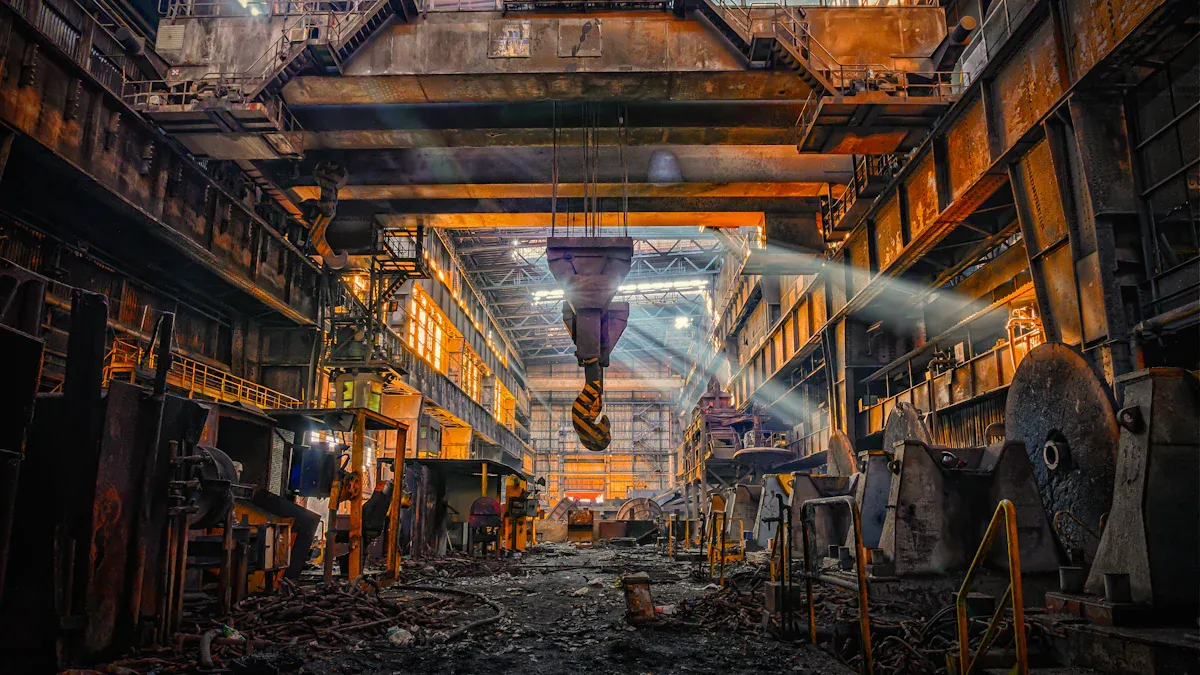
You use galvanizing equipment to coat steel or iron with a protective layer of zinc. This equipment includes several machines and systems that work together to make sure the zinc sticks well and covers every part of the metal. Modern galvanizing equipment uses advanced technology to give you the best results. You will find features like precise temperature controls, automated hoists, and safety systems such as emergency shutoffs and motion sensors. These features help you get a strong, even coating every time.
Tip: Custom-engineered galvanizing equipment can match your specific needs, making your process more efficient and saving energy.
The main parts of galvanizing equipment include systems for cleaning the metal, a kettle for holding molten zinc, and machines for moving and cooling the steel. Automation and heat recovery systems help you save energy and keep the process safe. You can trust these machines to deliver high-quality coatings with less effort.
Here is a table that shows the main stages and parts of galvanizing equipment:
| Stage | Description |
|---|---|
| Pre-treatment | You clean the steel by degreasing, pickling, and rinsing to help the zinc stick better. |
| Fluxing System | This step helps the zinc bond to the steel and stops rust from forming before coating. |
| Galvanizing Kettle | You dip the steel in molten zinc at a controlled temperature for an even coating. |
| Quenching and Cooling | You cool the coated steel to make the zinc layer strong and ready for use. |
| Inspection and Quality Control | You check the finished product to make sure it meets industry standards for strength and durability. |
Main Purpose and Benefits
You use galvanizing equipment to protect metal from rust and damage. The zinc coating acts as a shield, keeping moisture and air away from the steel. This process gives you a tough, long-lasting finish that works well in many environments.
The main benefits of using galvanizing equipment include:
- You get strong corrosion resistance, which keeps your steel safe for many years.
- The coating covers every part of the metal, even hard-to-reach spots.
- You save money because galvanized steel needs less maintenance and fewer repairs.
- The zinc coating is safe for the environment and can be recycled.
- Your finished product looks smooth and clean, which improves its appearance.
Here is a table that highlights the key benefits:
| Benefit | Description |
|---|---|
| Corrosion Resistance | Protects steel and iron from rust for a long time. |
| Durability | Gives you a uniform coating that lasts and covers all surfaces. |
| Cost-Effectiveness | Lowers your maintenance and repair costs over the years. |
| Environmental Sustainability | Uses non-toxic, recyclable zinc for responsible manufacturing. |
| Aesthetic Appeal | Provides a smooth, attractive finish for your projects. |
You will notice that hot-dip galvanizing, one of the most common methods, gives you a strong bond between the zinc and steel. This bond does not peel or flake, so your structures stay protected for decades. You also avoid frequent repairs, which means you save money and time. Galvanizing equipment helps you finish projects faster and with less labor, making it a smart choice for many industries.
How Galvanizing Equipment Works
Galvanizing Process Steps
You follow a series of steps when you use Galvanizing Equipment to protect steel. Each step prepares the metal for a strong zinc coating. The process uses machines and tanks to clean, treat, and coat the steel. Here is how you move through the process:
- You start by degreasing the steel in a caustic solution. This removes oils, dirt, and paint so the metal is clean.
- You place the steel in pickling tanks with hydrochloric or sulfuric acid. This strips away oxide, mill scale, and rust, exposing pure steel.
- You rinse the steel thoroughly to remove any acid or contaminants.
- You apply a flux solution, usually zinc ammonium chloride. This helps the zinc stick to the steel and prevents oxidation before coating.
- You immerse the steel in a galvanizing kettle filled with molten zinc. The zinc forms a metallurgical bond with the steel, creating a protective layer.
- You quench the steel in water or a corrosion-inhibiting solution. This cools the metal quickly and makes the zinc layer strong.
- You inspect the finished steel and measure the coating thickness. This ensures quality and durability.
Note: Each step is important. If you skip cleaning or rinsing, the zinc coating may not stick well. You get the best results when you follow the process carefully.
Here is a table that shows how the pre-treatment stage helps the zinc coating stick:
| Step | Description |
|---|---|
| Degreasing Tanks | Removes oils, dirt, or paint using a caustic solution. This allows better wetting of the steel. |
| Pickling Tanks | Strips away oxide, mill scale, and rust with acid. You expose a pure steel surface for bonding. |
| Rinse Tanks | Rinses the steel to eliminate contaminants that could disrupt the coating. |
| Fluxing System | Applies a flux solution to promote adhesion and prevent oxidation before galvanizing. |
Equipment Operation
You operate Galvanizing Equipment with safety and efficiency in mind. The machines use energy-efficient furnaces and advanced controls to keep the process smooth. You find several safety measures in place to protect you and your team:
- You wear protective clothing and heat-resistant gloves.
- You make sure the area has proper ventilation to avoid breathing fumes.
- You rely on emergency shutdown systems in case something goes wrong.
- You perform regular maintenance checks to keep the equipment running safely.
Modern Galvanizing Equipment uses energy-saving technology. New furnace designs lower the carbon footprint by using less energy and reducing emissions. You benefit from innovations like lower temperature coating techniques and energy recovery systems. These features help you save money and protect the environment.
You also see alternative coating methods that use less zinc and avoid harmful chemicals. Some systems use renewable energy sources, which further reduce emissions and resource consumption. You get strong corrosion resistance while making the process more sustainable.
Tip: Energy-efficient Galvanizing Equipment helps you lower operational costs and supports responsible manufacturing.
You control the machines with automated hoists and precise temperature settings. This ensures the zinc bonds well and covers every part of the steel. You finish the process with a strong, even coating that lasts for years.
Types of Galvanizing Equipment
Hot-Dip Galvanizing Equipment
You use hot-dip galvanizing equipment to coat steel or iron by dipping it into a bath of molten zinc. This method gives you a thick, durable layer that protects metal from corrosion. The process works well for large parts and structural steel. You can rely on hot-dip galvanizing for bridges, fences, and heavy machinery. The equipment includes kettles, hoists, and cooling tanks. You get a strong bond between zinc and steel, which lasts for decades.
Electro-Galvanizing Equipment
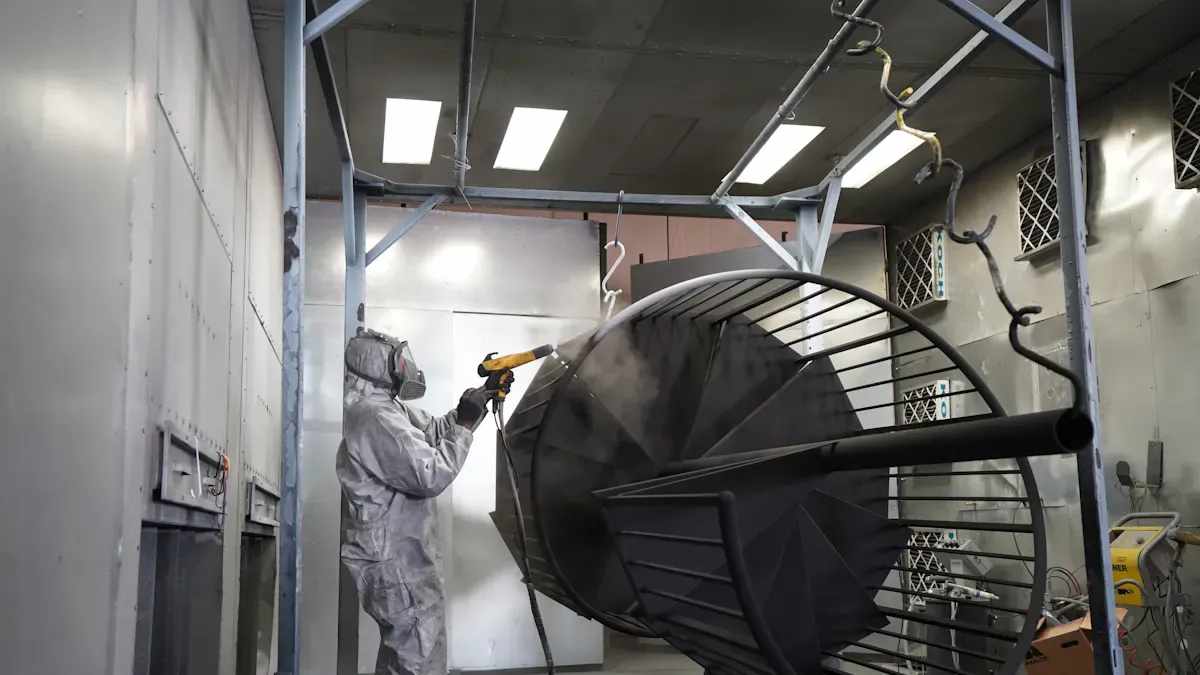
Electro-galvanizing equipment uses electricity to apply zinc to metal surfaces. You start by cleaning the metal to remove dirt and rust. Then, you place the metal in a zinc salt solution. An electric current moves zinc ions onto the metal, creating a smooth and uniform coating. You finish with a post-treatment to improve durability and appearance. This method works best for thin materials and parts that need a precise finish.
You can see the steps for electro-galvanizing in the table below:
| Step | Description |
|---|---|
| Surface Preparation | You clean the metal for better zinc adhesion. |
| Zinc Bath | You submerge the metal in a zinc salt solution. |
| Electrification | You apply an electric current to ensure a uniform coating. |
| Post-Treatment | You use a chromate solution to enhance durability and appearance. |
Electro-galvanizing gives you a smooth, even coating. You get precise control over thickness. However, this method offers lower corrosion resistance and costs more. It works best indoors or for automotive parts.
| Advantages | Limitations |
|---|---|
| Smooth and Uniform Coating | Lower Corrosion Resistance |
| Precision in Coating Thickness | Less Suitable for Outdoor Use |
| Better for Thin Materials | Higher Cost of Production |
Specialized Machinery
You use specialized machinery for large or irregularly shaped metal parts. The batch galvanizing process covers 66.8% of the market. You find this process in construction and heavy machinery industries. It gives you flexibility for coating complex shapes.
- The batch process works well for coating large, complex structures.
- You can use it for automotive and construction applications.
- It adapts to irregularly shaped components.
Automation and robotics improve efficiency. AI-driven systems optimize process parameters. Real-time defect detection boosts productivity and quality. Robots, like the Robomax Dross Removal Robot, automate tasks such as dross removal. You get safer operation and continuous production.
- You reduce zinc consumption.
- You enhance operator safety.
- You achieve 24/7 operation.
Galvanizing Equipment adapts to your needs, whether you work with small parts or massive structures.
Applications and Advantages
Industrial Uses
You see galvanizing used in many industries because it protects metal from rust and damage. When you use Galvanizing Equipment, you help your products last longer, even in tough conditions. Here are some industries that rely on this process:
- Construction
- Infrastructure
- Automotive
- Agriculture
- Utilities
- Telecommunications
- Heavy Equipment
- Mining
- Ship Building
Galvanizing is important in construction. It keeps steel beams, frames, and supports strong against weather and moisture. In the automotive industry, you find galvanized steel in car bodies and chassis. This helps cars resist rust and stay safe on the road. Utilities use galvanized steel for power transmission towers and pipelines. Farmers use it for barns, silos, and fencing because it stands up to harsh outdoor conditions.
You also see galvanized steel in many infrastructure projects. Some common examples include:
- Utility poles
- Bridge girders
- Highway guardrails
- Power transmission towers
- Lighting poles
- Reinforcement bars in bridges
- Station structures in public transit systems
- Railway supports
Galvanized steel has been popular for over a century. You find it in both homes and businesses, from gutters and rails to large public works.
Cost-Effectiveness
You choose galvanizing because it saves money over time. The zinc coating prevents rust, so you do not need to repair or replace metal parts often. This means you spend less on maintenance and inspections. The long-lasting protection gives you peace of mind and lowers your total costs.
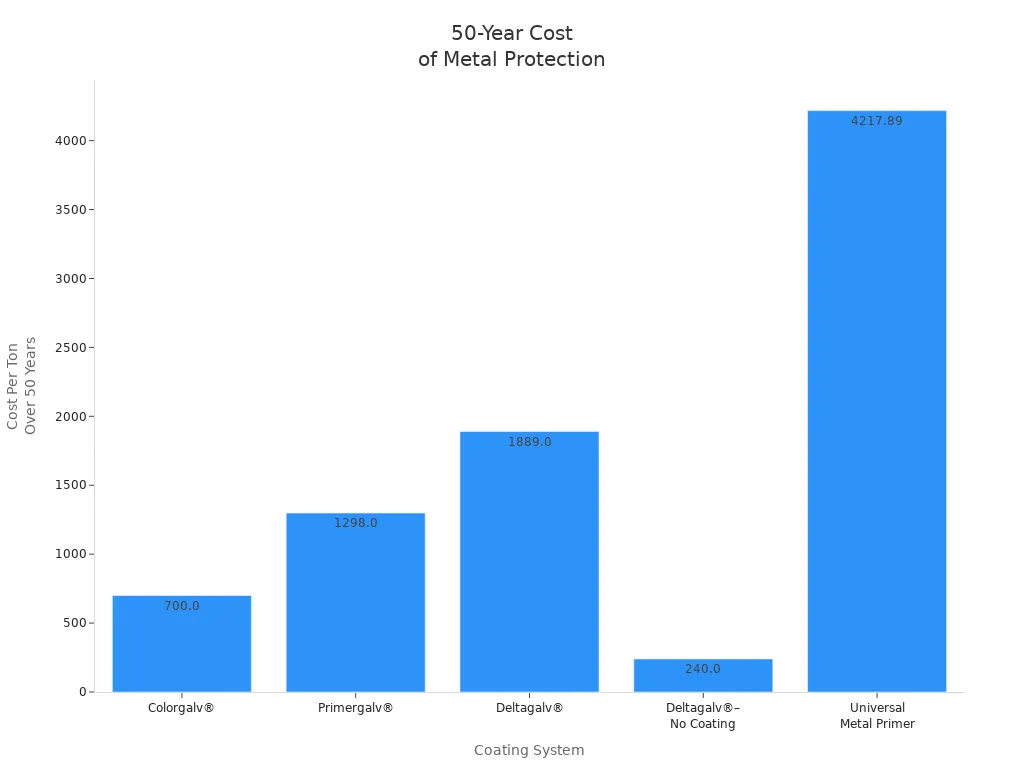
Here is a table that compares the cost of different metal protection methods over 50 years:
| Coating System | Initial Cost Per Ton | Maintenance Cost Per Ton | Cost Over a 50 Year Cycle Per Ton |
|---|---|---|---|
| Colorgalv® | $700.00 | $0.00 | $700.00 |
| Primergalv® | $550.00 | $288.00 | $1298.00 |
| Deltagalv® | $612.00 | $564.00 | $1889.00 |
| Deltagalv®– No Coating | $240.00 | $0.00 | $240.00 |
| Universal Metal Primer | $502.50 | $752.50 | $4217.89 |
You get more value from galvanizing because it needs little maintenance. The zinc coating lasts for decades and helps you avoid costly repairs. You also help the environment. The zinc is non-toxic and recyclable, which means you reduce waste and save resources.
Hot dip galvanizing is an environmentally friendly corrosion protection method. The zinc coating is non-toxic and entirely recyclable, making it a sustainable option for businesses looking to reduce their environmental impact.
Galvanizing equipment helps you protect steel and iron with a strong zinc coating. You get complete coverage, even at corners and inside hollow parts. This process keeps moisture and pollutants away, so your metal lasts longer and needs less care.
- The zinc layer grows evenly on all surfaces.
- You save money with lower maintenance and fewer repairs.
- You support eco-friendly manufacturing by reducing waste and energy use.
“With advanced galvanizing, you can compete globally and deliver top-quality products.”
Consider galvanizing for your next project to ensure lasting protection and value.
FAQ
What metals can you galvanize?
You can galvanize steel and iron. These metals bond well with zinc. Other metals, like aluminum or copper, do not work with this process.
How long does galvanized coating last?
Galvanized coatings can last 20 to 50 years. The lifespan depends on the environment. Coastal areas may reduce the coating’s life.
Is galvanized steel safe for the environment?
Yes. You use non-toxic, recyclable zinc. Galvanizing reduces waste and energy use. This makes it a sustainable choice for many industries.
Can you paint over galvanized steel?
You can paint over galvanized steel. First, clean and prime the surface. This helps the paint stick and last longer.
Post time: Jun-08-2026