
Modern industrial infrastructure relies heavily on automatic pipes galvanizing lines. These advanced integrated systems apply protective molten zinc coatings to steel tubes. The robust zinc layer prevents corrosion effectively. Thus, galvanized piping dramatically extends service life across demanding construction, oil and gas, and municipal water supply applications.
Efficient pipe production requires precise chemical surface preparation, optimized thermal preheating, sophisticated zinc kettle metallurgy, and high-speed core equipment automation.
Industrial facilities utilize these specialized automated systems to achieve superior coating uniformity and maximum operational yield.
Key Takeaways
- · Automated galvanizing lines apply protective molten zinc to steel pipes to stop rust and extend pipe lifespan.
- · Fully automated production workflows lower labor costs, cut chemical waste, and improve overall product quality.
- · Acid pickling removes rust scale, while caustic soda cleans heavy oils from steel pipe surfaces.
- · Preheating ovens dry steel pipes completely to prevent dangerous molten zinc explosions inside the zinc kettle.
- · Specialized air knives and steam lances blow away excess liquid zinc to create smooth pipe surfaces.
- · Engineers use pulse-fired gas burners and low-carbon steel plates to make zinc kettles last longer.
- · Automated sensor systems track zinc coating thickness to ensure full compliance with international ISO and ASTM standards.
Automated Process Sequence
Modern pipes galvanizing lines rely on automated sequence management to transform raw industrial tubes into high-performance, corrosion-resistant products. This continuous operational workflow integrates chemical cleaning, thermal treatment, and precise hot-dip coating steps.
Transitioning from manual operations to fully automated systems maximizes plant productivity while maintaining strict metallurgical standards.
- · Labor Optimization: Automated workflows require only one operator at the initial loading stage, which reduces human intervention during pretreatment.
- · Resource and Chemical Savings: Automated equipment minimizes acid consumption, lowers energy usage, limits chemical waste, and prevents flux contamination through automated belt replacements.
- · Workflow & Process Efficiency: Smart fixtures and automated Rail Guided Vehicles (RGVs) transport pipes seamlessly between acid tanks, rinsing stations, and fluxing entry zones.
- · Cost and Quality Control: Integrated system controls reduce overall operational expenses, lower shop floor noise, simplify maintenance routines, and guarantee uniform zinc application.
Chemical Surface Preparation
Effective surface preparation forms the foundation of strong zinc-iron alloy bonding. Steel surfaces must remain entirely free of oils, mill scale, rust, and dirt before zinc contact.
Degreasing with Caustic Soda
Steel pipes arrive at the galvanizing plant coated with protective oils, lubricants, and heavy greases from manufacturing mills. Workers submerge incoming pipes into an alkaline degreasing tank containing heated caustic soda solution. The warm caustic wash breaks down organic contaminants and saponifies oils. Automated agitation systems move pipes through the solution, ensuring total chemical contact on inner and outer tube surfaces.
Acid Pickling for Scale Removal
After degreasing, mechanical systems transfer the steel pipes into acid pickling vats filled with hydrochloric or sulfuric acid solutions. The acid dissolves oxide layers, mill scale, and residual rust from the iron substrate.
| Automation Mechanism | Functionality | Impact on Cycle Time |
| Automated Conveyance | Moves heavy items via motorized belts, rollers, and sensors. | Replaces manual lifting, eliminating transit delays between heating, galvanizing, and cooling stations. |
| Real-Time Process Synchronization | Coordinates speed and timing across sequential plant stages using live data. | Eliminates workflow imbalances and operational bottlenecks. |
| Dynamic Speed Regulation | Adjusts movement pace automatically according to stage requirements. | Maintains continuous material flow at optimal processing speeds. |
Freshwater Rinsing and Fluxing
Pipes move into clean freshwater baths immediately after acid pickling. This step removes residual acid and suspended iron salts, protecting subsequent tanks from cross-contamination.
Next, the pipes undergo chemical fluxing in an aqueous solution of zinc ammonium chloride. This chemical treatment eliminates remaining surface impurities and applies a light protective coating across the freshly pickled metal. The flux layer creates a physical barrier that isolates the steel substrate from atmospheric oxygen, halting secondary oxide formation prior to immersion in the hot zinc bath.
Preheating and Drying
Freshly fluxed pipes must pass through dedicated drying ovens before reaching the molten zinc kettle. Proper preheating ensures process safety and enhances overall coating quality.
Moisture Elimination
Trapped moisture poses a major explosion hazard when wet metal contacts molten zinc at elevated temperatures. The drying oven uses excess heat from kettle burners to evaporate every drop of liquid from internal and external pipe surfaces. Complete moisture removal eliminates dangerous zinc popping and splattering during immersion.
Thermal Matching
The preheating oven raises the steel pipe temperature to approximately 100°C to 150°C. Raising the steel temperature reduces thermal shock on both the metal tubes and the zinc kettle walls. Thermal matching prevents sudden temperature drops inside the molten zinc bath, which stabilizes furnace energy demand and maintains continuous operational efficiency.
Hot-Dip Zinc Immersion
The hot-dip dipping phase forms the protective zinc layer through a controlled chemical reaction between molten zinc and solid iron.
Inclined Immersion Kinetics
Automated star-wheel systems or angled overhead hoists lower pipes into the molten zinc bath at a precise angle. Inclined entry allows trapped internal air to escape quickly through the upper pipe end. Angled entry also allows molten zinc to flow smoothly through the pipe interior, preventing air pockets and guaranteeing complete inner diameter coating.
Controlled Dwell Time
Pipes remain submerged in the molten zinc kettle at operating temperatures near 450°C for a predetermined time. Controlled dwell time enables iron and zinc atoms to diffuse into each other, creating distinct zinc-iron alloy layers topped by a pure outer zinc finish. Precise automated timers prevent excessive alloy growth, ensuring maximum coating adhesion, high impact resistance, and long service life.
Extraction and Post-Treatment
Automated mechanical extraction arms lift the steel pipes from the molten zinc kettle at precise exit speeds. This controlled vertical lifting allows liquid zinc to drain back into the pot naturally. Immediately after extraction, post-treatment systems take control of the hot pipes to refine the surface finish, secure coating uniformity, and stabilize the zinc layer.
Excess Zinc Blowing
Heavy excess zinc gathers on pipe walls during removal from the bath. Advanced automated lines utilize specialized pneumatic blowing systems to clear this surplus material before it solidifies.
[Hot Dip Exit] ➔ [External Air Knife] ➔ [Internal Steam Lance] ➔ [Smooth Finish]
- · External Surface Clearing: High-pressure air knives wrap around the outer circumference of the pipe. These nozzles discharge focused streams of compressed air, stripping away unbonded molten zinc and creating a smooth outer wall finish.
- · Internal Bore Cleaning: A high-pressure steam lance automatically aligns with the internal pipe diameter. The system blasts superheated steam directly through the pipe interior, clearing slag, opening clogged bores, and establishing a uniform internal wall thickness.
Precise air and steam pressure control eliminates dangerous zinc tears, drips, and rough spikes. Proper blowing ensures full compliance with strict international dimensional tolerances.
Quenching and Passivation
Freshly blown pipes move quickly along magnetic transfer rolls into the final liquid treatment stages to set the metallurgical structure.
| Treatment Stage | Primary Chemical / Agent | Main Technical Objective |
| Water Quenching | Temperature-Controlled Water | Stops intermetallic iron-zinc reactions and cools the steel pipe rapidy. |
| Passivation | Chemical Passivation Solution | Applies a microscopic barrier to prevent wet storage stain (white rust). |
The quenching water bath cools the hot steel rapidly. This immediate temperature drop halts chemical alloy growth between the iron and zinc. Consequently, the pipe retains a bright metallic appearance and a durable protective surface.
After cooling, the pipes submerge briefly in a passivation bath. The passivation chemical forms a thin protective oxide film over the pure outer zinc coat. This microscopic seal shields the finished pipes against atmospheric humidity during storage, transit, and initial outdoor installation.
Zinc Kettle Engineering & Dynamics
The zinc kettle serves as the core heart of every automated pipe galvanizing line. Engineering teams design these massive vessel structures to withstand extreme continuous thermal stress, internal pressure, and chemical reactions.
[Thermal Shell Engineering] ➔ [Precise Temperature Control] ➔ [Extended Vessel Lifespan]
Kettle Structure and Metallurgy
Structural integrity determines overall plant safety. Heavy molten metal inside the kettle creates intense physical forces against furnace walls.
Low-Carbon Steel Standards
Engineers construct galvanizing kettles using specialized low-carbon, low-silicon steel plates. Standard carbon steels react quickly with molten zinc, causing rapid structural deterioration. Advanced engineering designs protect the kettle shell against continuous thermal deformation.
| Design Component | Engineering Configuration | Thermal Stress Mitigation Mechanism |
| Lifting Lug Orientation | Pins aligned perpendicularly to the main long axis | Permits longitudinal thermal expansion without imposing excess stress |
| Spreader Bar Assembly | Rigid spreader bar paired with flexible shackles | Accommodates thermal movement while ensuring uniform load distribution |
In addition, design teams run Finite Element Analysis (FEA) to evaluate stress concentrations. FEA models the full kettle shell, stiffener plates, and support ribs to predict fatigue life across repeated heating cycles.
Wall Thickness Monitoring
Molten zinc constantly erodes internal vessel walls over time. Operators must monitor wall degradation to prevent sudden catastrophic leaks.
Ultrasonic wall thickness gauges, including portable devices like the PosiTector UTG, perform non-destructive testing on kettle walls.
These electronic devices work effectively when workers access only a single outer side. Technicians measure steel thickness regularly, identifying high-wear spots long before structural failures occur.
High-Efficiency Heating Systems
Modern furnace designs deliver fast heat transfer while cutting fuel costs dramatically.
Pulse-Fired Gas Burners
High-velocity pulse-fired gas burners revolutionize kettle heating performance. Unlike traditional systems, pulse burners optimize furnace heat distribution through dynamic firing cycles.
| Operating Feature | Conventional Proportional Control | Pulse-Fired System |
| Burner Firing State | Runs at reduced turndown states | Fires always at maximum optimal capacity or turns off |
| Flame Dynamics | Lowers velocity, creating shorter flames | Maintains maximum velocity and turbulent heat flow |
| Heat Distribution | Concentrates heat in small local areas | Distributes heat uniformly around kettle walls |
| Fuel Usage | Requires high excess air, raising costs | Operates with low excess air, lowering fuel consumption |
Induction Heating Covers
Insulated furnace covers prevent massive radiant heat loss through the top zinc surface. Electrical induction heating elements inside insulated covers maintain stable bath temperatures during idle shifts. This automated thermal barrier saves valuable energy during non-production hours.
Pot Chemistry and Molten Zinc
Maintaining pure chemical bath conditions guarantees high coating quality on every finished tube.
Alloy Composition Control
Technicians monitor the molten zinc bath composition daily. Plant operators add small amounts of aluminum and nickel to the zinc liquid. Aluminum increases surface shine, while nickel controls iron-zinc alloy layer growth.
Temperature Uniformity
Automated control systems maintain strict bath temperatures between 445°C and 455°C. Hot spots accelerate chemical corrosion on kettle walls, while cold zones degrade coating adhesion. Uniform thermal distribution preserves kettle longevity and guarantees smooth pipe surfaces.
Automated Dross Management
Molten zinc constantly reacts with iron, residual flux, and oxygen during continuous pipe processing. This chemical interaction forms two distinct types of zinc by-products inside the bath, known as top ash and bottom dross. Automated dross management systems remove these impurities continuously without interrupting production.
[Molten Zinc Bath] ➔ [Chemical Reaction] ➔ [Top Ash (Surface) + Bottom Dross (Floor)]
Modern automated lines clear dross automatically, protecting steel pipe quality and reducing manual labor risks around hot liquid zinc.
Top Dross Skimming
Top dross forms on the bath surface when molten zinc reacts with atmospheric oxygen and flux remnants. This lightweight zinc ash floats across the liquid surface. Unchecked top dross sticks to emerging steel pipes, causing surface roughness, dark spots, and uneven coating thickness.
Automated top dross skimming systems utilize motorized sweeping blades to maintain surface purity:
- · Synchronized Surface Sweeping: Mechanical skimmer arms sweep across the liquid bath right before pipe immersion and extraction sequences.
- · Controlled Ash Collection: The skimmers push floating ash into dedicated collection pockets at the edge of the kettle automatically.
- · Zinc Recovery Optimization: Automated blades apply precise skimming depth, separating dry surface ash from reusable pure liquid zinc below.
By clearing the liquid surface continuously, these robotic devices ensure smooth pipe surfaces and reduce zinc waste significantly.
Bottom Dross Scrapers
Bottom dross consists of dense iron-zinc intermetallic crystals ($FeZn_{13}$). These heavy particles sink to the floor of the zinc kettle over time. Heavy dross accumulation insulates the kettle floor, traps heat, and causes premature structural damage to vessel walls.
| Management Aspect | Traditional Manual Methods | Automated Scraper Systems |
| Operational Impact | Requires full production shutdowns | Operates continuously during active shifts |
| Worker Safety | Exposes operators to thermal radiation | Keeps operators safe behind control barriers |
| Dross Removal Efficiency | Leaves soft sediment behind | Clears heavy crystals with mechanized buckets |
Specialized bottom dross scrapers move slowly along the floor of the kettle. These heavy-duty mechanical scrapers gather dense iron-zinc compounds into automated grabber buckets. The system lifts accumulated sediment out of the molten bath safely, preserving bath chemistry and extending the operational lifespan of the kettle.
Core Equipment in Pipes Galvanizing Lines
High-performance machinery powers every stage of modern hot-dip production. Automated hardware maintains continuous work velocity, prevents thermal loss, and guarantees uniform coating quality across every steel tube. Modern pipes galvanizing lines integrate heavy-duty mechanical transfer units, electronic sensors, and digital controls into a single efficient system.
Modern Pipes Galvanizing Lines Layout
Industrial plant engineers design production layouts to maximize space and maintain continuous material movement. A streamlined equipment arrangement prevents bottlenecks, reduces transport distances, and ensures safety across wet chemical and high-temperature zones.
Continuous Production Flow
The plant layout arranges processing stations in a strict linear sequence. Raw steel pipes move automatically from incoming storage racks through pretreatment chemical tanks, drying ovens, the zinc kettle, and post-treatment cooling stations.
[Raw Racks] ➔ [Pretreatment Vats] ➔ [Drying Oven] ➔ [Zinc Kettle] ➔ [Blowers & Quench]
Sensors track every pipe along the path. Drive units push materials forward constantly, eliminating idle waiting times between process stages.
Multi-Diameter Pipe Handling
Industrial operations process pipes of varying wall thicknesses and outer diameters on the same manufacturing line. Advanced production systems adjust quickly to manage different structural sizes without causing lengthy operational delays.
- · Flexible Tooling & Adjustability: The machinery incorporates easily adjustable components and rapid-change tooling, which reduces the setup duration required when switching between different pipe sizes and corrugation profiles.
- · Automated Control System: An integrated PLC/HMI interface streamlines operation by allowing operators to quickly adjust parameter settings and manage production digitally, minimizing manual labor and downtime.
Flexible physical mechanisms work together with smart software. This combination allows a single production facility to fulfill diverse customer orders efficiently.
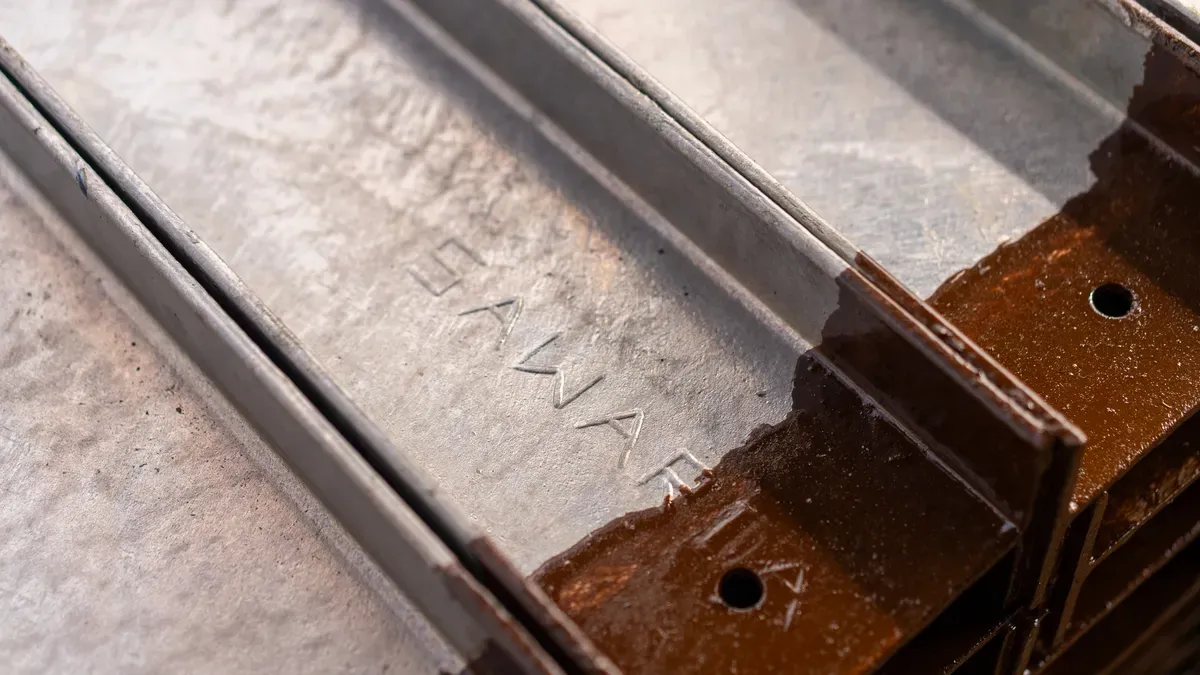
Robotic and Mechanical Handling
Heavy loads and intense heat make automated pipe movement necessary. Mechanized transfer equipment replaces hazardous manual handling and maintains total control over pipe positioning during dipping and lifting cycles.
Automated Overhead Cranes
Programmed crane systems lift and transport pipe bundles through chemical surface cleaning stages. Heavy steel chains hold raw pipe bundles securely above degreasing, acid pickling, rinsing, and fluxing vats.
| Crane System Feature | Technical Specification | Operational Benefit |
| Drive System | Dual-Motor Variable Speed | Prevents load swinging during transit |
| Positioning Accuracy | Laser-Guided Sensors (±1 mm) | Aligns bundles perfectly over narrow tank openings |
| Corrosion Resistance | Multi-Layer Epoxy Sealant | Protects crane structures against acid vapor damage |
The central computer controls dipping speed, hold times, and lift rates automatically. Precise crane movements maximize chemical contact and eliminate manual rigging errors.
Star-Wheel Transfer Systems
Specialized star-wheel mechanisms handle individual pipes at the zinc kettle stage. Rotating pockets inside the star-wheel grab single steel tubes from the feeder rack and lower them smoothly into molten zinc.
Synchronized star-wheels rotate at controlled speeds, immersing pipes into the zinc bath at a steady angle to release trapped air completely.
This rotating mechanical action feeds pipes continuously into the hot liquid bath. Steady feeding prevents surface clumping and maintains equal spacing between submerged tubes.
Magnetic Conveyor Systems
Electromagnetic roller conveyors guide hot steel pipes out of the molten zinc kettle and transport them toward blowing stations. Magnetic force holds the steel firmly against spinning rollers without crushing the soft, wet zinc layer.
High-Temp Magnetic V-Rollers
High-temperature permanent magnets embedded inside V-shaped rollers pull hot steel pipes upward along an inclined exit ramp. The V-shape centers the pipe automatically along the conveyor line.
- · Thermal Resistance: Rare-earth neodymium magnets retain full magnetic traction at operating temperatures above 450°C.
- · Non-Contact Support: Magnetic force holds the inner steel core while contacting only a tiny friction surface on the bottom exterior wall.
- · Drainage Support: The tilted roller angle helps excess liquid zinc run off the trailing pipe edge back into the kettle.
Variable-Frequency Drive Control
Variable-Frequency Drives (VFDs) power the motors on magnetic roller conveyors. Digital drives allow operators to tune line speeds precisely based on pipe weight, length, and diameter.
Slow extraction speeds allow heavy zinc coatings to settle smoothly on thick structural pipes. Faster speeds pull lightweight conduit pipes cleanly through air knives, preserving optimal production yields on every product run.
Internal and External Blowers
High-velocity blowing systems refine the hot metal surface immediately after pipes exit the zinc bath. Hot liquid zinc naturally creates heavy droplets, ripples, and excess wall thickness. Specialized air and steam equipment strips off surplus molten zinc before solidification occurs.
[Hot Dip Kettle Exit] ➔ [Ring Air Knives (OD Clean)] ➔ [Steam Lance Jet (ID Clean)] ➔ [Uniform Wall Finish]
These automated blowing stations maintain consistent coating quality across modern pipes galvanizing lines, preventing material waste and ensuring compliance with international dimensional standards.
Outer Diameter Air Knives
Outer diameter (OD) air knives wrap around the exterior pipe surface as magnetic conveyors lift the pipe out of the kettle. High-pressure blowers force compressed air through continuous narrow slots inside a circular ring housing.
Precise pressure regulation at the air knife ring removes surplus zinc while preserving the required underlying alloy layer.
- · 360-Degree Air Distribution: Continuous circular air nozzles supply uniform air pressure around the full outer circumference of the pipe.
- · Adjustable Ring Geometry: Actuators adjust nozzle distances automatically to accommodate different pipe diameters instantly.
- · Angle Precision: Technicians tilt air nozzles at specific downward angles to push excess liquid zinc directly back into the molten bath.
This targeted air stripping action smooths out run-down tears and leaves a polished outer surface. Controlled air volume prevents surface chilling, allowing the remaining zinc layer to settle evenly.
Inner Diameter Steam Lances
Inner diameter (ID) steam lances clear excess zinc from the internal pipe bore. While air knives clean the outer wall, an automated mechanical arm aligns a high-pressure steam nozzle with the open pipe end.
| Operational Parameter | Air Blowing (OD) | Steam Blasting (ID) |
| Primary Medium | Dry Compressed Air | Superheated Dry Steam |
| Target Region | External Pipe Wall | Internal Tube Bore |
| Main Objective | Strips outer drips and smooths surface finish | Clears internal blockages and levels interior coating |
| Thermal Behavior | Cools surface metal slightly | Maintains high internal temperature during blast |
The system injects superheated steam through the interior pipe chamber at high velocities. Superheated steam prevents premature zinc freezing inside narrow hollow tubes.
Automation controllers inside advanced pipes galvanizing lines synchronize steam blast duration with pipe travel speed. The high-energy steam jet blows out loose zinc dross, clears internal weld seams, and creates a completely smooth internal passage for fluid flow.
Process Metrics and Quality Control
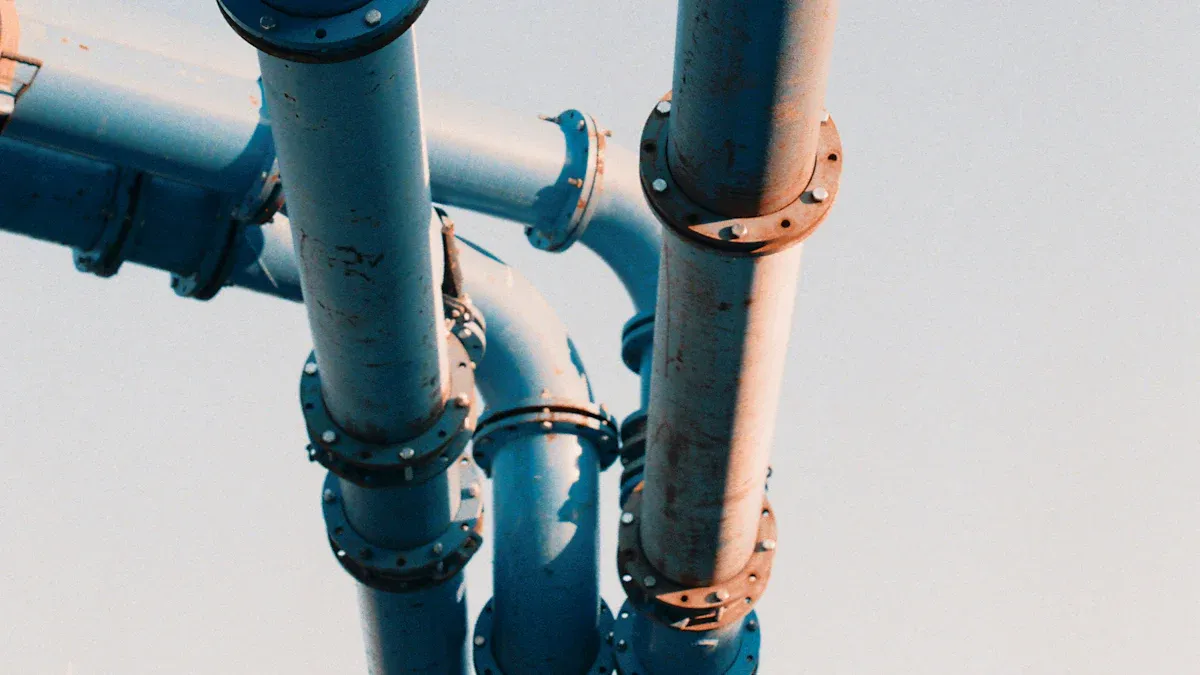
Modern industrial plants rely on strict process metrics to guarantee product durability. Automated systems continuously collect operational data, ensuring consistent batch quality across high-speed production runs.
Coating Thickness Standards
Precise coating measurement protects steel tubes from early corrosion failures. Advanced sensors track zinc distribution continuously along automated pipes galvanizing lines.
ASTM A53 Compliance
The ASTM A53 standard specifies strict requirements for structural and pressure piping. Steel tubes must meet precise average weight and minimum thickness thresholds. Operators adjust extraction speeds and blowing pressures to maintain standard compliant surface layers across all pipe dimensions.
ISO 1461 Metrics
ISO 1461 governs hot-dip galvanizing standards across international markets. Modern facilities deploy real-time monitoring technology to satisfy these global specifications:
- · Multi-Sensor Integration: Automated tools combine X-ray fluorescence (XRF) spectroscopy and electromagnetic methods to measure coatings without stopping production.
- · Precision & Adaptation: Specialized algorithms adjust for steel composition changes, detecting layer variations as small as ±2 μm.
- · Automated Accuracy: Measurement devices perform periodic self-calibration using reference standards to protect long-term accuracy.
- · Closed-Loop Control: Sensor systems send immediate data to production controllers, triggering instant parameter tweaks and predictive alerts.
According to the International Zinc Association (2024), deployable real-time sensor analytics and automated setpoint alerts enable galvanizing lines to decrease coating weight standard deviations by 40–60% compared to manual controls. This automated feedback loop dynamically adjusts line parameters (such as air knife pressure, strip gap, and line speed) to maintain a strict ±3 g/m² tolerance required for automotive applications.
Zinc Yield Optimization
Raw zinc represents a major operating cost for galvanizing facilities. Process engineers optimize bath parameters to eliminate material waste and improve overall plant profitability.
Ash Formation Reduction
Automated enclosures limit atmospheric air exposure over the zinc bath. Controlling chemical flux purity also prevents excessive oxidation. These measures decrease surface ash formation significantly, preserving pure zinc inside the liquid bath.
Intermetallic Layer Control
Tight bath temperature management controls chemical reactions between iron and zinc. Precise thermal timing limits brittle intermetallic alloy growth. As a result, the outer coating remains flexible, impact-resistant, and uniform.
Predictive Line Maintenance
Unplanned downtime disrupts factory workflows and damages key machinery. Facility managers use smart diagnostic technology to detect hardware failures early.
Ultrasonic Kettle Auditing
Technicians perform routine ultrasonic testing on outer kettle walls. Sound waves measure steel plate thickness without draining molten zinc. Early detection highlights high-wear areas before structural leaks occur.
Thermal Imaging Checks
Infrared cameras scan furnace walls continuously during production shifts. Thermal imaging pinpoint hot spots, insulation breakdowns, and burner imbalances early. Proactive repairs protect furnace linings and prolong total kettle service life.
Modern pipes galvanizing lines deliver exceptional coating consistency through an automated process flow. Steel tubes move smoothly from caustic soda pre-treatment through preheating, zinc kettle dipping, and internal steam blowing.
Advanced automation and precise kettle chemistry cut zinc consumption significantly while maximizing total pipe yield.
Facility managers should select machinery featuring automated thermal controls and dynamic air blowing systems to guarantee long-term operational efficiency.
FAQ
What is the main purpose of caustic soda in pipe galvanizing?
Caustic soda removes organic contaminants from raw steel pipes.
Heated alkaline baths dissolve manufacturing oils, protective greases, and mill lubricants. This initial degreasing step ensures clean metal surfaces for subsequent acid pickling and strong zinc bonding.
How do air knives and steam lances clean galvanized pipes?
Automated air knives and steam lances blow away excess liquid zinc before solidification.
| Equipment | Target Surface | Cleansing Agent |
| Air Knives | Outer Diameter (OD) | High-Pressure Compressed Air |
| Steam Lances | Inner Diameter (ID) | Superheated Dry Steam |
How long does a steel zinc kettle typically last?
High-quality low-carbon steel kettles typically operate continuously for 4 to 10 years. Proper bath temperature management, routine pulse-burner calibration, and regular ultrasonic wall thickness auditing prevent premature vessel failure and extend operating lifespans.
Why do automated galvanizing lines preheat pipes before immersion?
Preheating ovens raise pipe temperatures to approximately 150°C to eliminate surface moisture completely.
[Fluxed Pipe] ➔ [Drying Oven (150°C)] ➔ [Moisture-Free Entry] ➔ [Safe Zinc Kettle]
This thermal treatment prevents dangerous molten zinc explosions and minimizes thermal shock inside the kettle.
What is the difference between top ash and bottom dross?
Top ash and bottom dross represent two distinct zinc by-products in the bath:
- · Top Ash: Light zinc oxide floating on the molten surface.
- · Bottom Dross: Heavy iron-zinc intermetallic crystals ($FeZn_{13}$) sinking to the kettle floor.
Automated scrapers remove both impurities continuously.
Which coating standards govern automatic pipe galvanizing quality?
Automatic lines comply primarily with ASTM A53 and ISO 1461 standards. These international specifications dictate minimum coating thickness, surface smoothness, and uniform zinc weight metrics across various industrial pipe diameters.
Post time: Aug-03-2026