
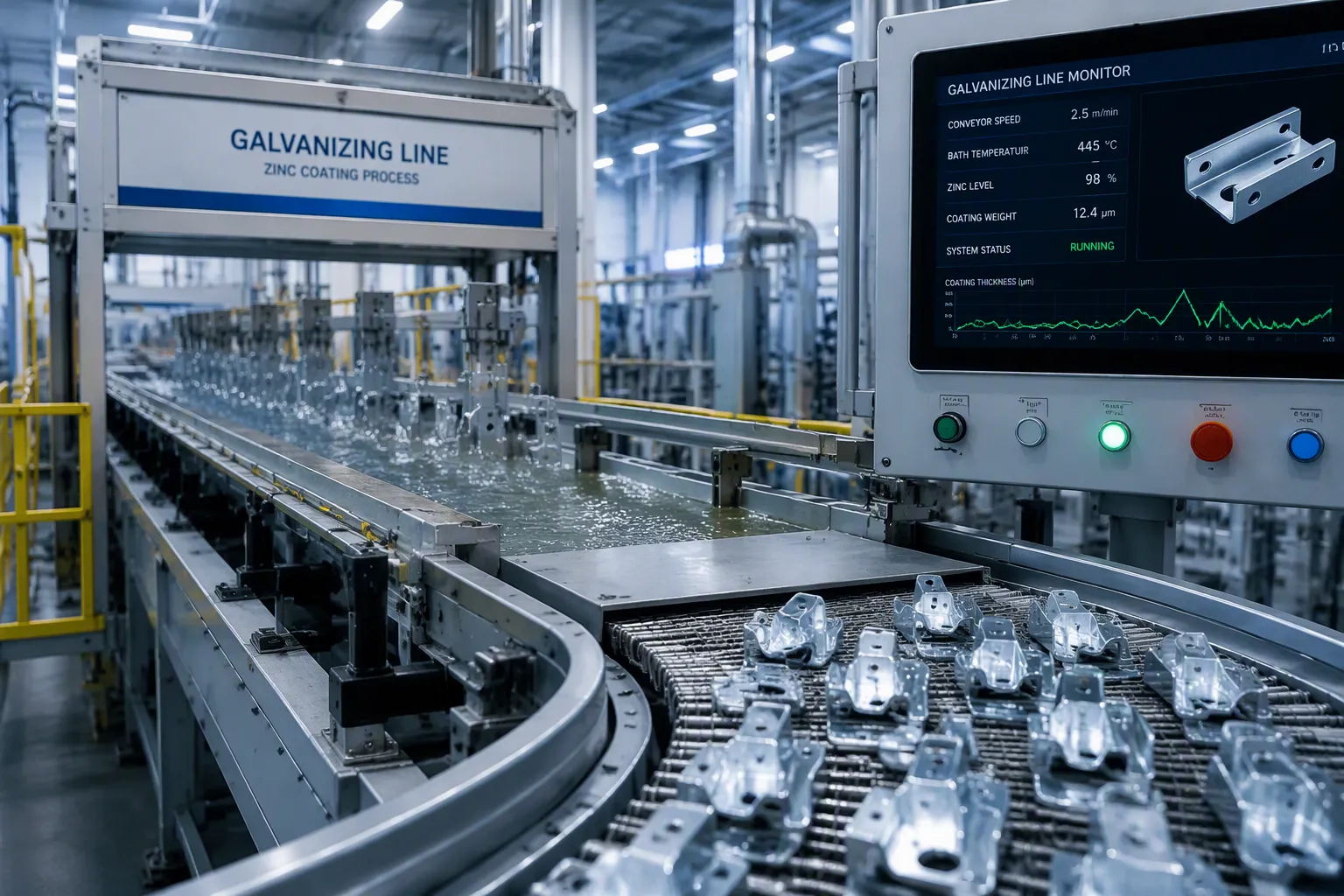
Small parts galvanizing lines accelerate auto production by enabling continuous inline processing, eliminating batch delays, and reducing material handling. Throughput refers to units processed per hour, while cycle time measures the duration from part entry to exit. Why do traditional batch methods create bottlenecks, and how does robotic continuous processing solve this? You will learn the mechanics, efficiency gains, and production impact, with measurable results.
Key Takeaways
- · Continuous galvanizing lines process parts without waiting. This method cuts cycle time from hours to minutes.
- · Automated systems handle loading, pretreatment, and galvanizing. This reduces manual labor and material handling costs.
- · Robotic lines switch between part sizes quickly. This flexibility supports mixed production runs efficiently.
- · Inline sensors monitor coating quality in real time. This minimizes rework and ensures consistent corrosion protection.
- · Adopting continuous galvanizing improves production speed. This helps meet just-in-time delivery demands.
The Batch Galvanizing Bottleneck
Why Batch Processing Slows Down Assembly
Batch galvanizing forces you to wait. You must accumulate hundreds or thousands of small parts before you fill a full load. This waiting period creates idle time on your production floor. Parts sit in bins, taking up space and tying up capital. Work-in-progress inventory grows larger with every passing hour. Your assembly line cannot move forward until the galvanizing department catches up.
The problem deepens when you send parts to a central facility. You load containers onto trucks, wait for transit, and coordinate schedules with an outside vendor. Each step adds hours to your lead time. A part that needs corrosion protection might leave your facility for days before it returns. This extended timeline disrupts your just-in-time delivery commitments. You cannot promise fast turnaround when your coating process depends on external logistics.
The Cost of Material Handling and Changeover
Material handling consumes more time than you might expect. Workers must sort, count, and package parts before shipment. They must unload and reload parts at the galvanizing facility. Every touch point introduces risk of damage or loss. You pay labor costs for each handling step, and you pay again when parts arrive damaged or misplaced.
Changeover between different part sizes creates another drain on production. Traditional batch lines require thorough cleaning between runs. Workers must remove residual zinc, adjust fixtures, and recalibrate equipment. This setup process can consume hours of valuable production time. You lose capacity every time you switch from bolts to nuts or from screws to brackets. The more variety your production requires, the more time you lose to changeovers.
These inefficiencies compound across your entire operation. Batch processing creates a ripple effect that slows every downstream process. You cannot achieve lean manufacturing when your coating step operates in isolation. The solution requires a fundamentally different approach to small parts galvanizing, one that eliminates the waiting, the handling, and the changeover delays entirely.
How Continuous Small Parts Galvanizing Works
Automated Loading and Inline Pre-Treatment
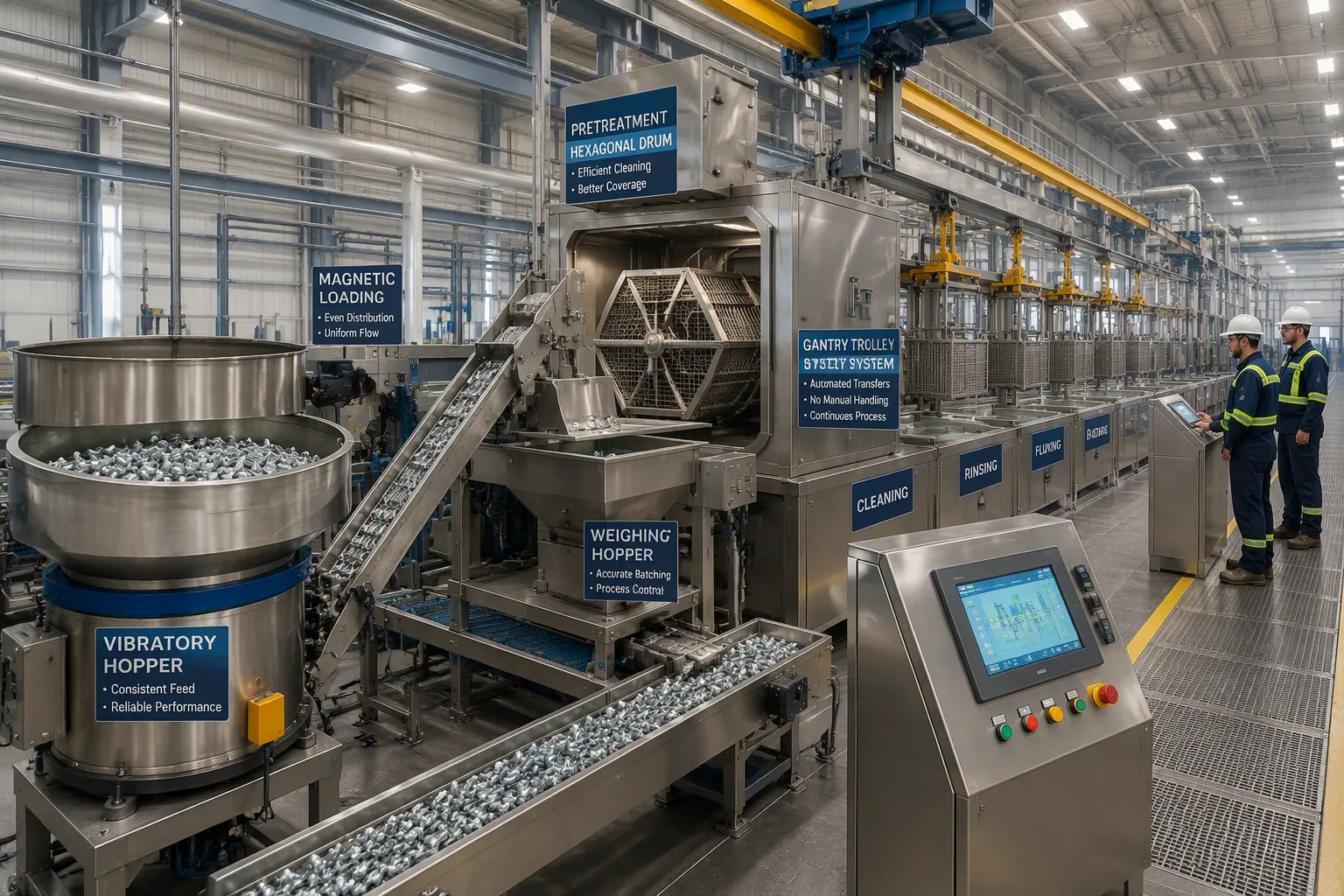
You begin with a vibratory hopper that receives loose workpieces directly from your production line. A magnetic loading system distributes these parts evenly across the feeding surface, eliminating manual sorting entirely. This automated start removes the first human delay from your process. Workers no longer stand at a table, counting and arranging components by hand.
The system transfers your parts to a weighing hopper next. This step ensures precise batch control without operator intervention. You get consistent batch sizes every cycle, which means predictable processing times and stable quality outcomes. The weighing hopper releases materials into the pretreatment chamber automatically, maintaining a continuous flow that never pauses for human decisions.
Pretreatment uses a hexagonal drum combined with a gantry traveling trolley structure. This design cleans your parts thoroughly while keeping them moving through the line. The drum rotates to expose every surface to cleaning solutions, removing oils, rust, and scale that would compromise zinc adhesion. Meanwhile, the gantry trolley transports baskets between stations without manual lifting or repositioning.
This entire pre-treatment sequence operates inline. Your parts move from cleaning to rinsing to fluxing without ever leaving the system. You eliminate the transit time between separate machines that batch processing requires. The continuous flow means your parts enter the galvanizing stage already clean, dry, and ready for coating. No waiting, no staging areas, no work-in-progress piles.
Fast-Dip Cycles with Rotary Galvanizing
The galvanizing robot takes over once pretreatment finishes. This robot automatically loads your basket into molten zinc for precise immersion. You remove manual handling delays completely from this critical step. The robot controls immersion depth, duration, and withdrawal speed with repeatable accuracy that human operators cannot match.
The core innovation in this system is the rotary galvanizing device. This equipment combines galvanizing and centrifugation into a single process. After the basket withdraws from the zinc bath, the device spins at high speed to remove excess zinc from your parts. The centrifuged zinc liquid falls directly back into the zinc pot below. You recover material that batch processes would waste, reducing both heat loss and zinc ash generation.
Your parts benefit from an annular zinc pot operating at 450°C. This temperature matches traditional hot-dip galvanizing specifications, producing a higher quality coating than high-temperature methods achieve. The metallurgical bond between zinc and steel forms correctly at this temperature, giving you consistent coating thickness and adhesion across every part.
After galvanizing, an automatic ash removal step cleans the surface before centrifugation begins. A centrifugal manipulator then transfers your basket to a high-speed centrifuge, accelerating the finishing process. The robot completes the cycle by moving the basket to the discharge conveyor. Your finished parts exit the system without any human pauses.
This continuous workflow processes 10 to 100 kilograms of parts per cycle. The automated line integrates loading, pretreatment, galvanizing, spinning, cooling, and unloading into one seamless operation. You achieve production efficiency measured in hundreds of kilograms per hour, while conventional hanging galvanizing requires more manual labor and delivers lower throughput. The entire small parts galvanizing process becomes faster, safer, and more consistent.
Small Parts Galvanizing Efficiency Gains
Higher Throughput and Reduced Changeover Time
Continuous lines process thousands of parts per hour. Traditional batch methods handle only hundreds per batch. This difference transforms your production capacity. You no longer wait for a full load to accumulate before starting the coating process. Parts flow through the system as they arrive from your assembly line.
Consider a real-world example. A plant switching from batch to continuous galvanizing can cut coating cycle time from 4 hours to 30 minutes per part lot. That reduction means your parts return to the assembly line eight times faster. You can fulfill more orders in the same shift. Your work-in-progress inventory shrinks dramatically because parts do not sit waiting for processing.
Changeover time also drops significantly. The robotic system adjusts automatically between different part sizes. You do not need workers to manually clean and reconfigure equipment between runs. The system switches from bolts to screws to brackets without lengthy setup procedures. This flexibility lets you handle mixed production runs efficiently. You can process small orders economically because the changeover penalty no longer consumes your profit margin.
The continuous flow eliminates the staging areas that batch processing requires. You free up valuable floor space. You reduce the labor hours spent moving parts between stations. Every minute saved in material handling translates directly to faster production cycles. Your assembly line stays fed with coated parts exactly when needed.
Minimized Rework and Tighter Quality Control
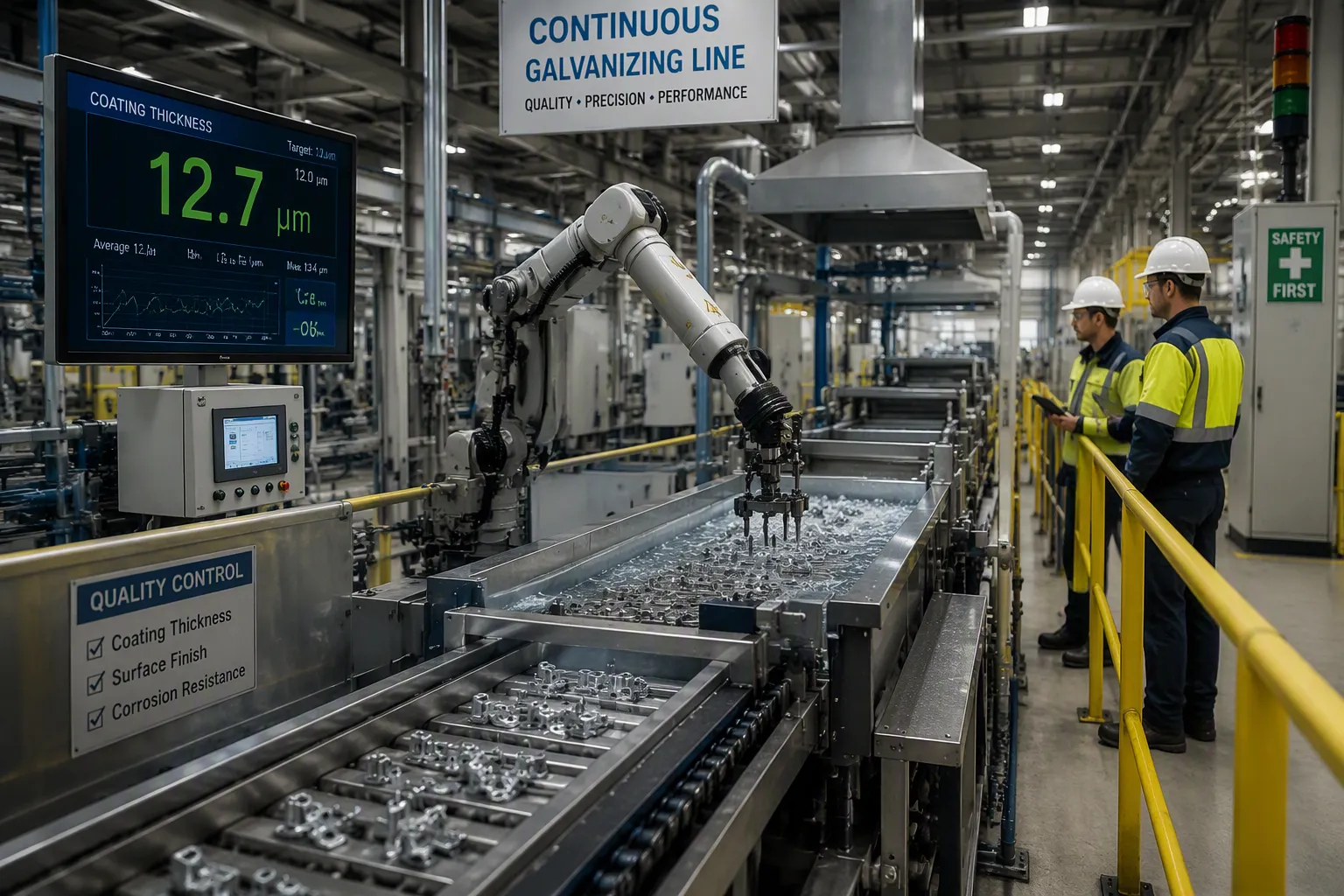
Quality control becomes proactive rather than reactive. Inline sensors monitor coating thickness continuously as parts exit the galvanizing bath. You detect problems immediately instead of discovering them after parts have moved downstream. This real-time feedback loop prevents defective parts from reaching your assembly line.
Automated inspection systems use cameras, sensors, and artificial intelligence to examine every part. These systems catch even the smallest imperfections in the coating. Manual visual inspection cannot match this level of consistency. Workers tire and miss defects. Machines maintain the same vigilance throughout every shift.
X-ray fluorescence gauges provide the industry standard for in-line coating weight measurement. These non-contact devices scan the full width of your parts with accuracy of ±1–2 g/m². You know exactly how much zinc protects each component. Beta-backscatter gauges work on older lines but do not meet automotive-grade requirements. Gravimetric testing according to ISO 1461 or ASTM A90 serves as the reference method for calibration and dispute resolution.
| Measurement Method | Accuracy / Role |
| X-ray fluorescence (XRF) gauges | Industry standard for in-line, non-contact coating weight measurement; accuracy ±1–2 g/m² with full strip width scanning |
| Beta-backscatter gauges | Used on older lines; acceptable for non-automotive grades |
| Gravimetric testing (ISO 1461 / ASTM A90) | Reference method for calibration and dispute resolution |
Air knife parameters directly affect coating quality. You monitor knife pressure, distance, angle, and line speed continuously. Small drifts from setpoints trigger alerts before defects occur. For example, a pressure deviation of just ±0.05 bar from setpoint warns you of potential coating issues. A positional drift of ±1 mm in knife-to-strip distance signals that coating weight may rise non-linearly. These early warnings let you correct problems while the line runs, not after you produce scrap.
The result is dramatically less rework. You catch coating thickness or adhesion issues in real time. You adjust parameters immediately rather than reprocessing entire batches. Your assembly line keeps moving because defective parts never reach it. This tight quality control reduces waste, saves material, and protects your reputation for reliable corrosion protection. Small parts galvanizing becomes a competitive advantage rather than a bottleneck in your production system.
Continuous small parts galvanizing lines eliminate batch delays, reduce handling, and tighten quality control. You gain shorter lead times, lower work-in-progress inventory, and dependable just-in-time delivery. Parts flow through your facility without waiting, staging, or external transit.
The measurable results speak clearly. Coating cycles drop from hours to minutes. Rework shrinks through real-time inspection. Your assembly line stays fed with consistent, corrosion-resistant components.
As automotive production demands intensify, robotic galvanizing solutions become a strategic necessity, not merely an efficiency upgrade. You position your operation for lean manufacturing and competitive responsiveness. The choice is straightforward: adopt continuous processing or accept the bottleneck.
FAQ
How long does it take to install a continuous galvanizing line?
Most robotic small parts galvanizing lines install within 8 to 12 weeks. Your team needs minimal downtime because the system integrates with existing production flow. The manufacturer handles setup and calibration. You receive operator training during installation. Your line returns to full capacity quickly.
Can the system handle different part sizes without stopping?
Yes. The robotic line adjusts automatically between part sizes. You do not need manual changeover procedures. The system switches from screws to brackets to nuts without pausing. This flexibility supports mixed production runs efficiently. You maintain continuous throughput regardless of product variety.
What coating quality can you expect compared to batch methods?
You achieve superior coating quality with the annular zinc pot at 450°C. This temperature creates a proper metallurgical bond between zinc and steel. The rotary centrifuge removes excess zinc evenly. Your parts receive consistent coating thickness across every surface. Quality matches or exceeds traditional hot-dip standards.
How does the system reduce operating costs?
You save on labor because automation replaces manual handling. You recover zinc through the rotary centrifuge, reducing material waste. Lower heat loss from the enclosed system cuts energy consumption. Reduced rework means fewer rejected parts. These savings typically offset the initial investment within two years.
What maintenance does the robotic galvanizing line require?
Routine maintenance focuses on the zinc pot, robot arms, and sensors. You perform daily checks on temperature and centrifuge balance. Weekly cleaning removes zinc ash buildup. The manufacturer provides a preventive maintenance schedule. Most repairs take less than four hours. Your line maintains high availability with proper care.
Post time: Aug-31-2026