
You solve white fume issues in hot-dip galvanizing by installing a white fume enclosure with effective extraction and filtration. Visible emissions above the kettle, worker exposure to fine zinc particles, and tightening compliance pressure make this a daily concern for plant managers.
White fume forms when flux solvent meets molten zinc. A fixed enclosure captures those emissions at the source, and a bag filter separates the fine particles before clean air leaves the chimney. Flux condition, bath temperature, and immersion practice all change how much fume you generate. Airflow balance and routine maintenance keep capture and filtration working.
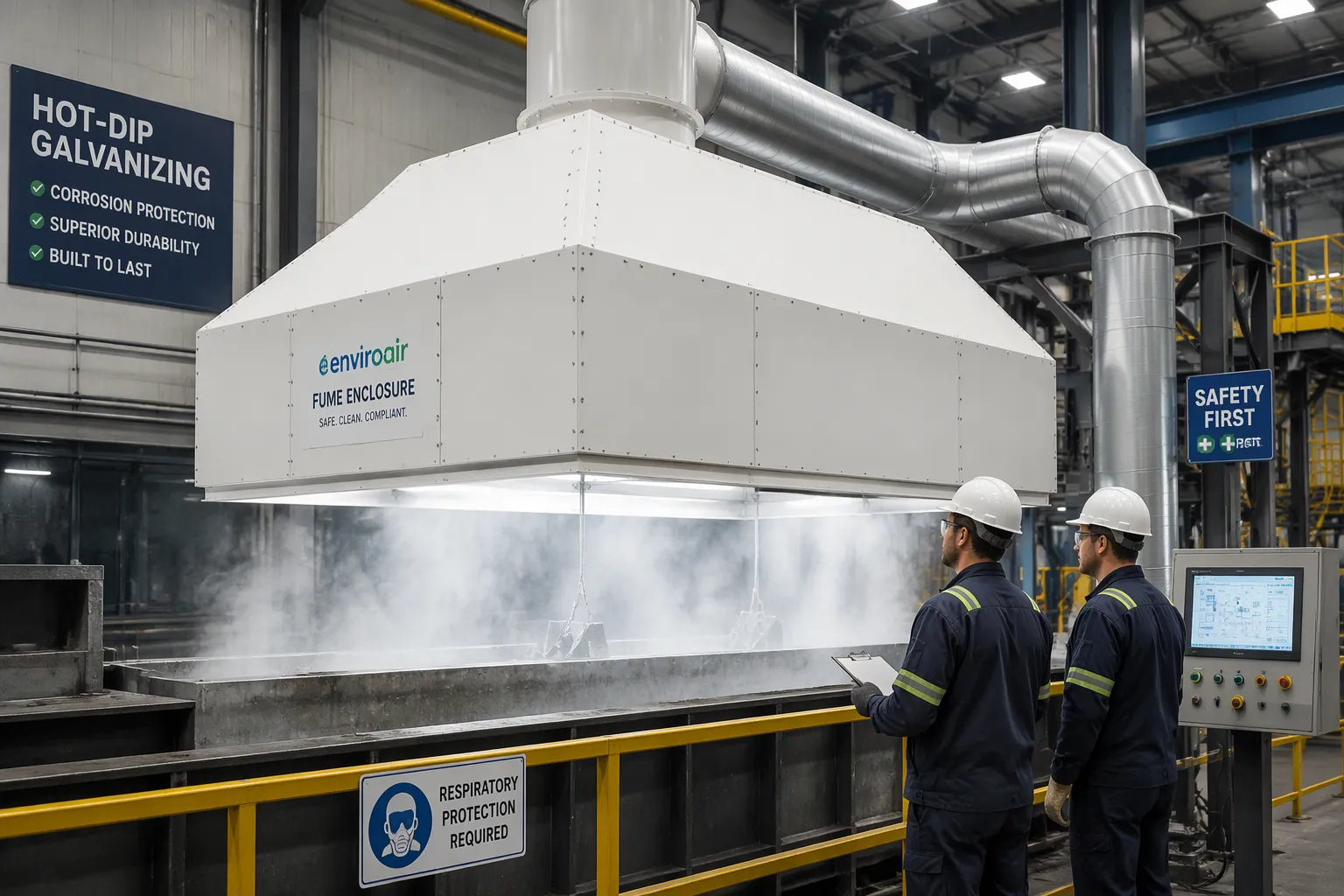
The payoff is a healthier workplace, easier compliance, and lower long-term operating costs.
Key Takeaways
- · White fume forms when flux meets molten zinc. You can control it by managing flux, temperature, and immersion.
- · A white fume enclosure captures emissions at the source with a canopy and extracts them through ductwork.
- · A bag filter separates fine particles from the air. Clean air exits the chimney.
- · Operational factors like airflow and maintenance keep the system working efficiently.
- · The enclosure improves worker health, simplifies compliance, and reduces long-term costs.
What Causes White Fume
The Flux and Zinc Reaction
You see white fume above the kettle because flux solvent reacts with molten zinc. The flux layer prepares the steel surface for coating. When the steel enters the bath, the flux breaks down rapidly. This reaction releases water vapor, zinc ash, and fine particles into the air. The water vapor condenses quickly and forms the visible white plume. The fine particles stay suspended and travel with the plume.
The reaction itself is normal and necessary for good coating adhesion. You cannot eliminate it entirely. You can control how much fume escapes into your plant. The key is to understand the reaction and manage the conditions that drive it.
Emission Triggers
Several process conditions raise emission levels. Flux condition matters most. Wet, contaminated, or over-applied flux produces more smoke. Old flux with high moisture content reacts violently and releases a heavy plume. Bath temperature also plays a role. A hotter bath speeds the reaction and generates more vapor. You need enough heat for proper coating, but excessive temperature increases fume volume.
Immersion practice changes emission patterns. A fast, deep plunge pushes more flux into the bath at once. This sudden contact releases a concentrated burst of smoke. A slower, controlled entry spreads the reaction over time and reduces peak emissions. You should also watch the angle of entry. A tilted workpiece traps flux and creates uneven reaction zones.
Your operators control these triggers every shift. Consistent flux management, stable bath temperature, and disciplined immersion technique all lower the fume load your enclosure must handle.
How the White Fume Enclosure Works
Canopy and Extraction Points
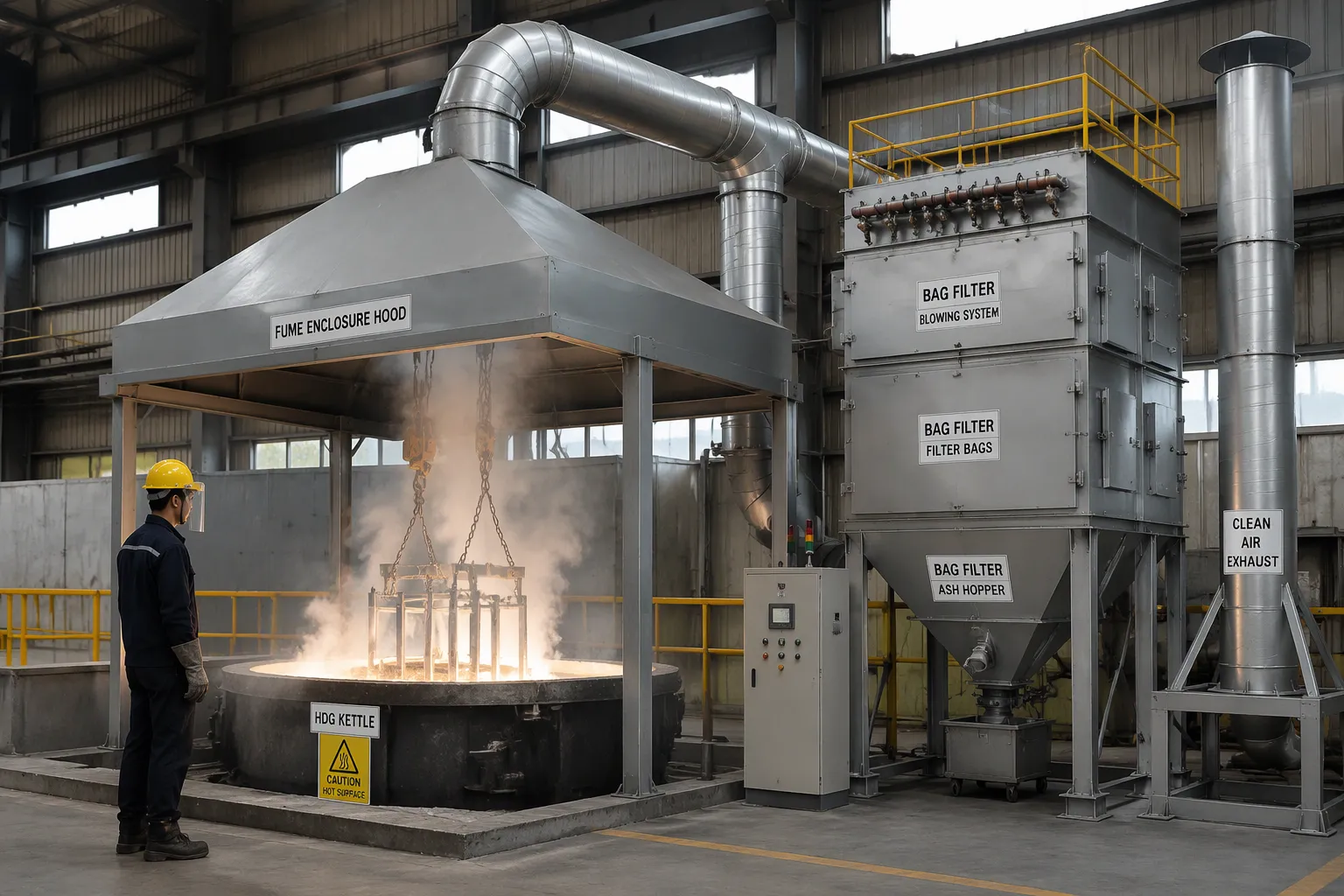
The white fume enclosure starts with a fixed canopy installed directly above the kettle. This canopy surrounds the fume source and stops smoke from drifting into your plant. An exhaust hole sits at the top of the enclosure. The hole connects to ductwork that pulls emissions away from the bath.
You capture fume at the source with this layout. Smoke rises from the molten zinc and enters the canopy before it spreads. The enclosure acts as a physical barrier between the process and your workspace. Operators load and unload workpieces through the open side of the canopy. The exhaust hole stays positioned over the highest fume zone.
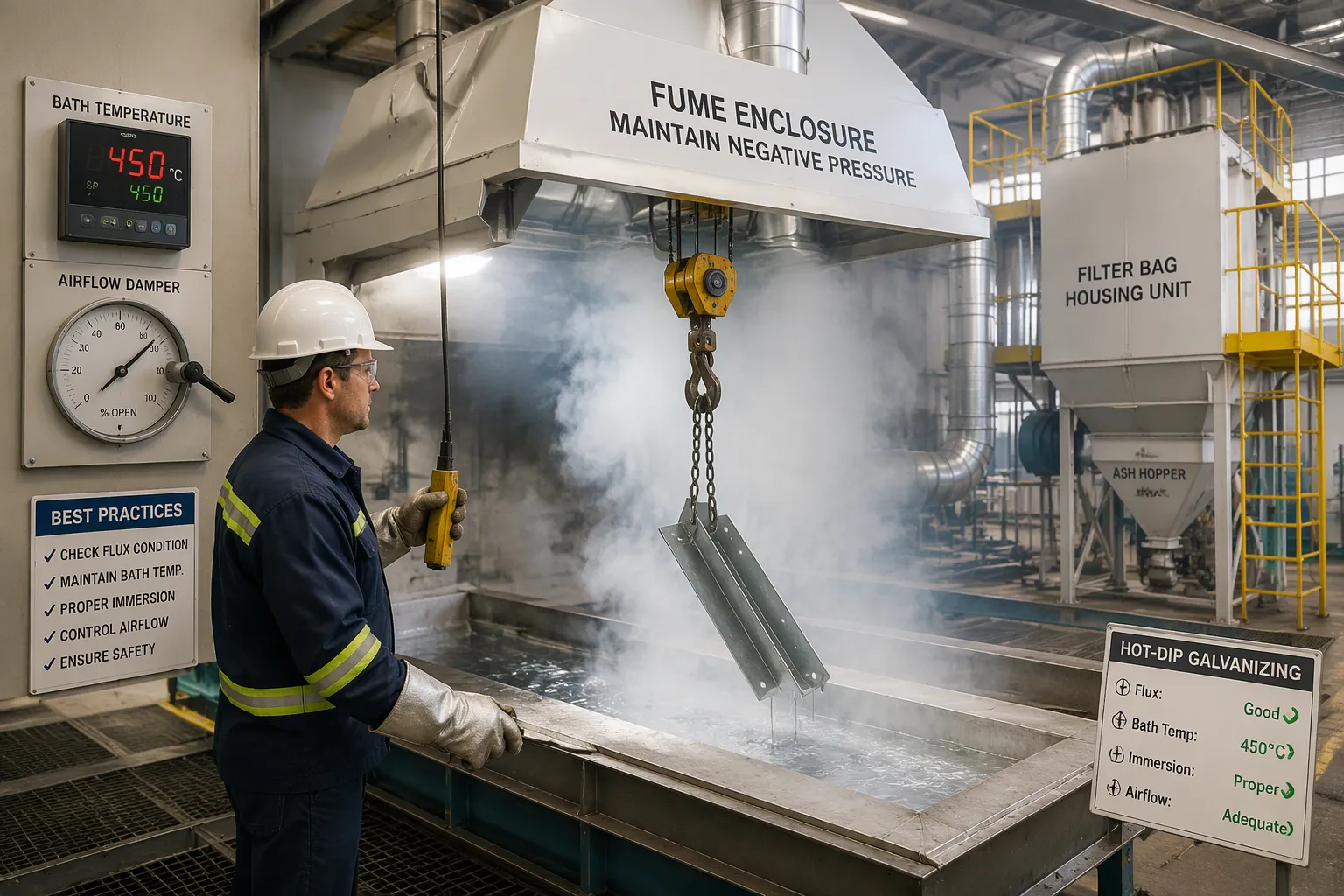
Extraction points along the canopy pull air at a steady rate. You balance the airflow so the canopy holds a slight negative pressure. This negative pressure keeps smoke inside the enclosure. Any gap or opening in the canopy still draws air inward. The design protects workers who stand near the kettle during dipping.
Bag Filter and Exhaust
The captured fume travels through ductwork to a bag filter. Smoke and fine particles hit the outer surface of the filter bags. The bags block the particles and let clean air pass through. This step achieves physical gas-dust separation. Purified air then discharges through a chimney. You can adjust the discharge amount to match your actual conditions.
The system uses a box-type bag dust remover. This unit has three bins stacked in a rectangular body. The upper bin holds a circulating blowing system that shakes dust off the bags. The middle bin contains the cloth bags where separation happens. The lower bin collects dust. Ash falls into an ash hopper under high-pressure air and leaves through a discharge port.
Zinc smoke tends to stick to filter bags and block airflow. The equipment solves this problem with a heat blowing and vibration facility. This feature keeps the bags clear during operation. You can also unload the bags for cleaning and reuse them. Reusable bags lower your operating costs over time.
The whole white fume enclosure works as one connected system. The canopy captures emissions, the ductwork moves them, and the bag filter cleans the air. Each part depends on the others. A well-sealed canopy feeds the filter a steady stream. A clean filter keeps airflow strong at the extraction points. You get reliable fume control when all parts work together.
Operational Factors That Affect Fume
Flux, Temperature, and Immersion
Your flux condition sets the baseline for fume volume. Wet or contaminated flux carries extra moisture into the bath. That moisture flashes off violently and drives a heavy plume. You should monitor flux moisture and replace spent flux on a regular schedule. Consistent flux application also prevents localized hot spots that release concentrated smoke.
Bath temperature directly controls reaction speed. A hotter bath melts flux faster and releases more vapor per dip. You need sufficient heat for proper coating, yet every extra degree adds to the fume load. Hold the bath at the lowest temperature that still meets your coating specification.
Immersion practice shapes the emission peak. A fast, deep plunge pushes a large flux volume into the zinc at once. The result is a sudden burst that can overwhelm your extraction. Train operators to use a steady, controlled entry. A consistent entry angle also prevents trapped flux from reacting unevenly.
Airflow and Maintenance
Airflow balance keeps the canopy working. You want a slight negative pressure inside the enclosure at all times. Smoke then stays inside and moves toward the exhaust hole. Check the fan setting and duct dampers after any process change. A weak draft lets fume escape at the canopy opening.
Routine maintenance protects filtration performance. Inspect the filter bags on a fixed schedule. Look for tears, heavy dust buildup, and signs of zinc smoke adhesion. Replace damaged bags promptly and clean reusable bags before reinstalling them. The heat blowing and vibration facility handles most adhesion, yet manual checks still catch problems early.
Ash discharge deserves the same discipline. Empty the ash hopper before it fills. A full hopper restricts airflow and strains the fan. Log each inspection and each ash removal. These simple records show you where performance drifts and help you plan bag replacement before capture efficiency drops.
Benefits of a White Fume Enclosure
Health and Compliance
You gain cleaner indoor air when the enclosure captures fume at the kettle. Smoke and fine zinc particles enter the canopy before they spread across the shop floor. Workers near the dipping station breathe less particulate matter during each shift. The bag filter then removes the fine particles from the airstream. Only purified air leaves through the chimney. This source-capture approach keeps the visible plume out of your workspace and protects the people who run the line.
Compliance becomes simpler with a system built for emission control. The enclosure holds the fume inside and routes it through filtration. You can adjust the chimney discharge amount to match your permit conditions. Monitoring and control equipment can support your recordkeeping. Regulators increasingly focus on fugitive emissions from galvanizing shops. A fixed enclosure with documented filtration gives you a clear answer during an inspection. You show capture at the source and treatment before release.
Cost and Efficiency
Reusable filter bags lower your operating costs over time. You can unload the bags, clean them, and reinstall them instead of buying new ones each cycle. The heat blowing and vibration facility reduces blockage from zinc smoke adhesion. Fewer blocked bags mean fewer unplanned stoppages and less manual cleaning. Your maintenance team spends less time on filter changes and more time on production.
Stable airflow keeps the process running at a steady rate. A clean filter maintains strong draft at the extraction points. The canopy then holds its negative pressure and captures fume consistently. You avoid the cycle of rising emissions and falling capture that comes with neglected filtration. The white fume enclosure also protects nearby equipment from dust buildup. Over the long term, you get predictable operating costs and a process that holds its efficiency shift after shift.
A white fume enclosure tackles the root causes of white fume at every stage. The canopy captures emissions at the kettle before they spread, the bag filter separates fine particles from the airstream, and the chimney releases only purified air. You get a healthier workplace, easier compliance with emission regulations, and lower long-term operating costs from reusable bags and steady process efficiency.
Every galvanizing line differs in kettle size, flux practice, and airflow needs. Consult experts for a white fume enclosure assessment tailored to your line. They will size the canopy, extraction, and filtration to your actual process.
FAQ
What exactly is white fume made of?
White fume contains water vapor, zinc ash, and fine particles. The flux solvent reacts with molten zinc and releases these materials into the air. The vapor condenses fast and forms the visible plume. The fine particles stay suspended and travel with it.
Does the enclosure capture fume from every dip?
The canopy sits above the kettle and captures emissions as they rise. A slight negative pressure keeps smoke inside the enclosure. You still need disciplined immersion practice. A violent plunge can release a burst that briefly exceeds capture capacity.
Can you reuse the filter bags?
Yes. You can unload the bags, clean them, and reinstall them. Reuse lowers your operating costs over time. A heat blowing and vibration facility keeps zinc smoke from blocking the bags during operation.
Can you adjust the exhaust to match your process?
Yes. You can set the chimney discharge amount to match your actual conditions. You also balance fan settings and duct dampers to hold negative pressure inside the canopy. Recheck airflow after any process change.
Will the system fit an existing galvanizing line?
The enclosure is built around your kettle and dipping practice. Canopy size, extraction points, and filtration capacity all follow your line layout. An expert assessment confirms the right configuration before installation.
Post time: Nov-18-2026