
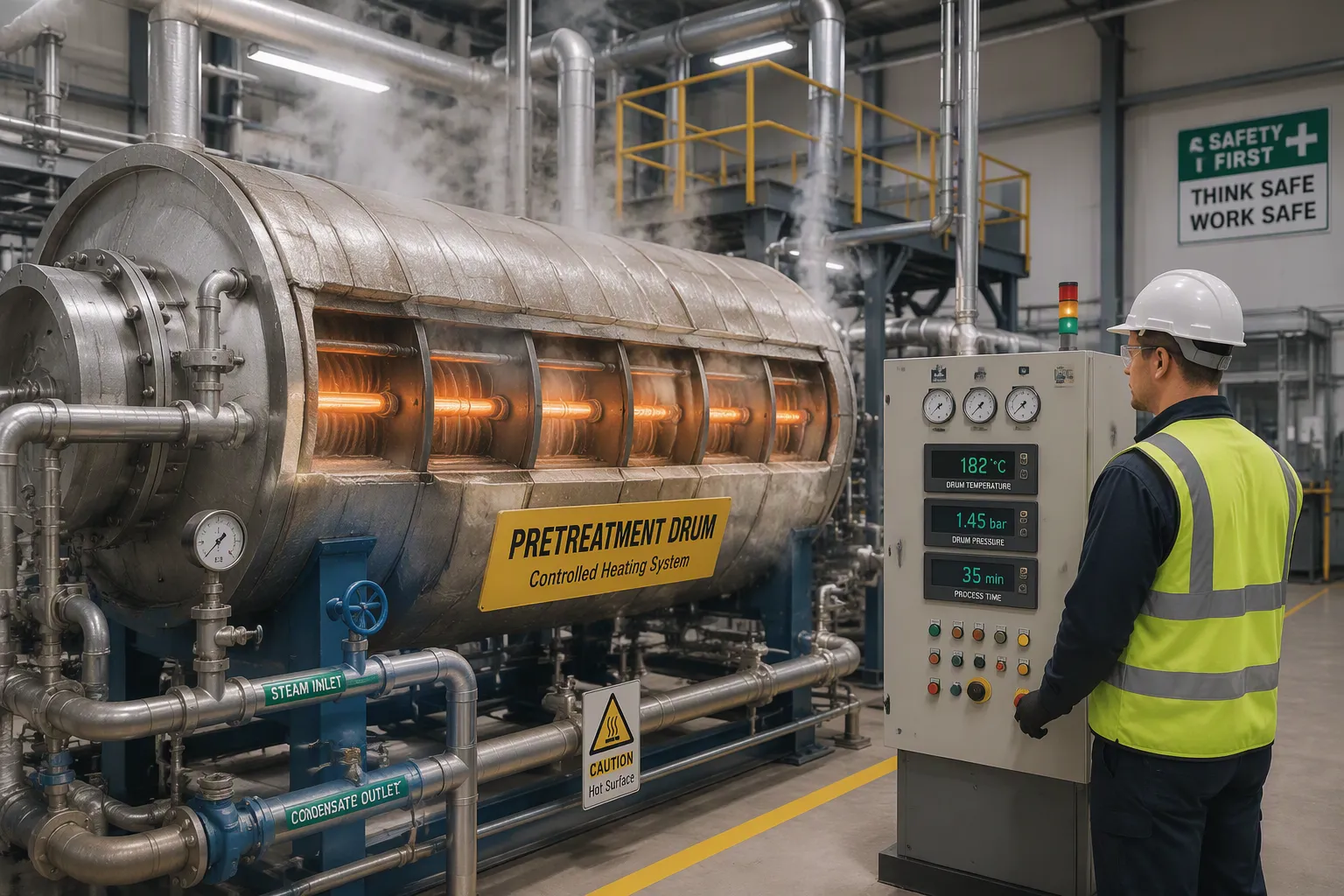
Molten zinc explosions are violent, preventable events. They start with moisture. Pretreatment drum heating stops them before they start. This process removes water from raw materials and keeps drum surfaces above the dew point. Dry drums mean no steam-driven reactions and no hydrogen gas formation. You face three main risks when moisture meets molten zinc: steam explosions, hydrogen generation, and direct zinc-water reactions. Each pathway can cause serious injury and equipment damage. Understanding these risks matters for anyone working with molten zinc. Moisture control is not optional—it is the foundation of safe operations. You must treat drying as a core safety practice, not an afterthought.
Key Takeaways
- · Moisture causes zinc explosions in three ways: steam explosions, hydrogen gas formation, and direct zinc-water reactions.
- · Pretreatment drum heating dries raw materials and keeps drum surfaces above the dew point to prevent moisture from reaching the molten zinc.
- · Dry materials and warm drums stop steam explosions and hydrogen build-up before they can start.
- · An integrated drying oven at 80°C to 100°C removes final moisture from parts after plating aid.
- · Treat moisture control as a core safety practice to keep molten zinc operations safe.
Why Moisture Causes Zinc Explosions
The Molten Zinc and Water Reaction
You create a violent hazard when water meets molten zinc. The melt sits far above the boiling point of water. A single drop of moisture flashes into steam almost instantly. That steam expands with tremendous force inside a confined space. The sudden pressure spike throws molten metal outward.
The same contact also generates hydrogen gas. Water reacts with hot zinc and releases hydrogen. This gas can collect above the melt. A spark or a hot surface then ignites it. You face two threats at once: a pressure-driven eruption and a flammable gas cloud.
How Trapped Moisture Becomes a Hazard
Moisture hides in many places before it reaches the melt. Raw materials often carry surface water or absorbed dampness. Drum surfaces collect condensation when temperatures swing. Plating aid residue holds water against the metal. Each source delivers a small but dangerous payload.
The path to the melt is short and direct. Wet scrap drops into the bath. Damp drums tip their contents into the liquid zinc. Residual plating aid carries trapped water straight into the reaction zone. You cannot see most of this moisture. You only see the result when the melt erupts.
This is why drying must happen early. Once wet material touches molten zinc, you have no time to react. The explosion follows in an instant. Control the moisture before the melt, and you remove the fuel for the reaction.
How Pretreatment Drum Heating Works
Removing Moisture Before the Melt
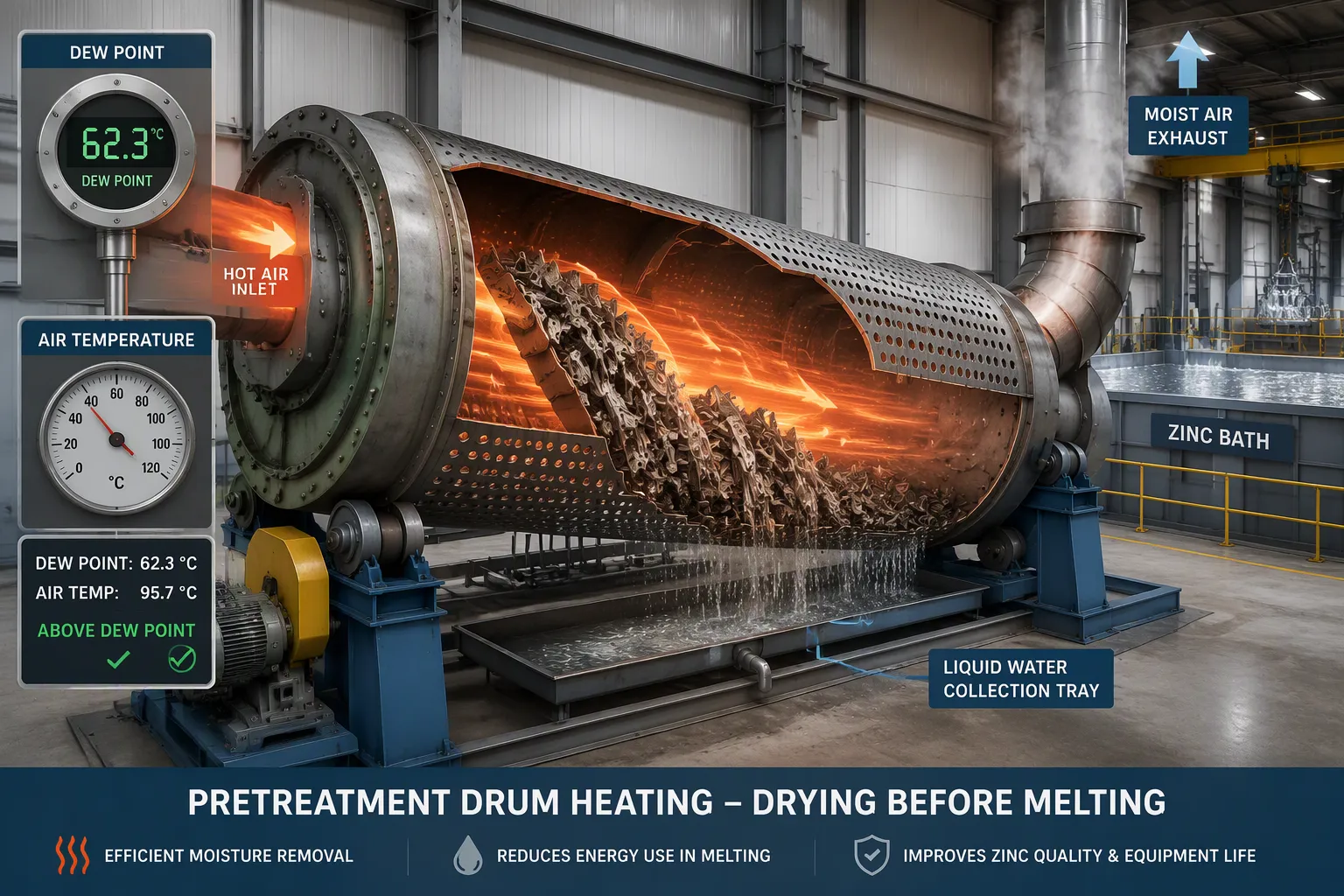
A rotating pretreatment barrel removes moisture through motion and heat working together. The cylindrical barrel sits on a slight incline and turns continuously. Wet material inside tumbles over itself again and again. Internal flights, or material lifters, scoop up the wet scrap and cascade it through a stream of hot air. This action exposes far more surface area to the heat.
The drying sequence follows a clear order:
1. The barrel rotates on its incline, so the wet material tumbles without stopping.
2. Internal flights lift the scrap and drop it through hot air, maximizing surface exposure.
3. Controlled heat raises the material temperature enough to vaporize surface moisture and oils, while staying below the melting point so the metal stays undamaged.
4. Regulated air flow, co-current or counter-current, carries the vaporized moisture away into exhaust and filtration systems.
5. In combined mechanical-thermal designs, perforated drum walls also let liquid water drain out as the material tumbles, cutting the energy needed for thermal evaporation.
Mechanical drainage handles the bulk of free water. Thermal vaporization then removes the surface moisture and oils that remain. Combined designs gain efficiency from both effects at once. This is the core logic behind pretreatment drum heating: dry the material thoroughly before it ever approaches the melt.
Pretreatment Drum Heating and Dew Point Control
Heat alone is not enough. You must also hold drum surfaces and raw materials above the dew point. The dew point is the temperature at which moisture in the air condenses into liquid. Drop below it, and condensation forms on steel surfaces and on the scrap itself. That film of water then rides into the zinc bath.
Bonantech’s Pretreatment Drum & Heating system shows how this works in practice. The system recovers waste heat from flue gas to heat all pretreatment tanks, including degreasing, pickling, and plating aid tanks. The waste heat circuit includes a combined heat exchanger in the flue, PFA heat exchangers at both ends of each pool, a soft water system, and a control system. The flue gas heat exchanger uses heat-resistant stainless steel or 20# seamless steel pipe with an infrared nano high-temperature energy-saving anti-corrosion coating. This coating absorbs substantially more heat than ordinary waste heat exchangers.
When flue waste heat runs short, an auxiliary hot air furnace supplements it. You keep the drum warm in every operating condition, not just when the flue is hot. Steady warmth above the dew point means no condensation on drum walls, no damp scrap, and no hidden water waiting for the melt. Pretreatment drum heating thus delivers two controls at once: it dries the material and it keeps the whole system dry.
Preventing Steam Explosions
How Rapid Steam Expansion Causes Eruptions
Water turns to steam in a flash when it touches molten zinc. The melt is far hotter than the boiling point of water. A droplet cannot slowly warm up. It vaporizes almost instantly. That phase change expands the water into a volume of gas many times larger than the original droplet.
This sudden expansion needs somewhere to go. Inside a confined space, the pressure spikes without warning. The melt throws metal outward with great force. You get a violent eruption, not a gentle bubble. The reaction takes milliseconds, so no operator can react in time. This is why the hazard must be removed upstream, long before the melt.
Eliminating the Steam Source
You cannot stop steam from forming once water reaches the bath. You can stop the water from getting there. That is the job of pretreatment drum heating. The rotating barrel and its heat source dry raw materials before they enter the melt. Surface moisture vaporizes in the drum, not in the zinc.
The drying step removes the fuel for the reaction. Dry scrap cannot flash into steam. Dry drums cannot drip condensation into the bath. You break the causal chain at its first link. The melt stays quiet because nothing wet ever touches it. This upstream control is far more reliable than any downstream defense.
Preventing Hydrogen Generation
The Chemistry of Hydrogen Formation
Water does not simply boil away when it meets molten zinc. It also reacts with the metal. The reaction splits the water and releases hydrogen gas. You now have a flammable gas rising off the bath surface.
Hydrogen brings its own danger. It ignites easily. A spark, a hot surface, or a small steam eruption can set it off. The gas can collect in pockets above the melt or inside equipment. A trapped cloud of hydrogen turns a small upset into a serious blast. You face a fire hazard on top of the pressure hazard.
How Dry, Heated Drums Stop Build-Up
Hydrogen needs water to form. Remove the water, and the reaction never starts. That is the simple logic behind pretreatment drum heating. The rotating barrel and its heat source dry raw materials before they reach the melt. Dry scrap carries no water into the bath. No water means no hydrogen.
Temperature control keeps the system dry at every step. The drum stays above the dew point, so condensation cannot form on drum walls or on the scrap. Waste heat from flue gas warms the pretreatment tanks, and an auxiliary hot air furnace covers any shortfall. The integrated drying oven finishes the job. It dries parts after plating aid at 80°C to 100°C, so the metal does not absorb moisture on the way to the bath.
This continuous drying breaks the chain at its source. You never give hydrogen a chance to build up. The melt stays quiet, and the air above it stays clear.
Preventing Zinc-Water Reactions
Breaking Water and Zinc Contact
You stop the zinc-water reaction by keeping water and molten zinc apart. The reaction itself is simple. Water touches hot zinc, and the metal splits the water apart. The result is hydrogen gas, heat, and a violent splash of molten metal. You cannot tame this reaction once it begins. You can only prevent contact.
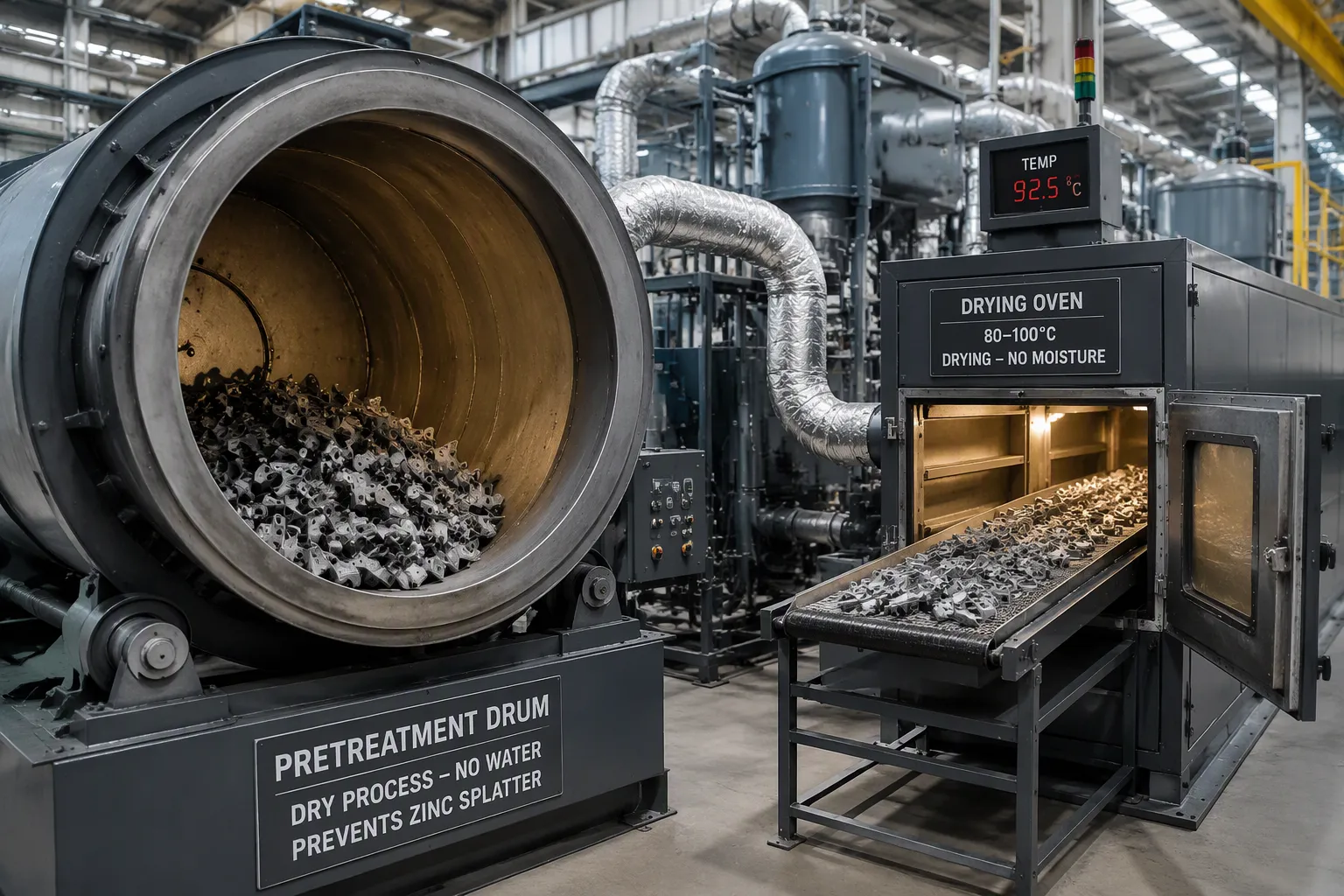
Pretreatment drum heating breaks that contact at every stage. The rotating barrel dries raw materials before they reach the melt. Warm drum walls stay above the dew point, so condensation never forms. Dry scrap enters the bath with no hidden water on its surface. Each of these steps removes one path for water to reach the zinc. The melt stays calm because nothing wet ever touches it.
The Drying Oven as a Final Safeguard
The integrated drying oven gives you one last line of defense. Parts leave the plating aid tank with a wet film on their surface. That film holds water against the metal. The oven dries the parts at 80°C to 100°C after plating aid. This temperature range drives off surface moisture without letting the parts absorb more dampness from the air.
This final dry matters because plating aid residue holds water well. A damp part carries that water straight into the melt. The oven removes it before the part moves on. You get dry parts, and dry parts mean no explosions and no splashes at the bath.
Temperature control ties the whole process together. You hold the drum warm, the tanks warm, and the oven warm. Each step keeps moisture from creeping back in. This continuous control is your safeguard from start to finish.
Moisture drives every zinc explosion. Water flashes to steam, generates hydrogen, and reacts directly with the melt. Each path ends in the same violent result. Pretreatment drum heating interrupts all three. You remove the water before it reaches the bath, and you hold surfaces above the dew point so condensation never forms.
Treat this as a preventive control, not a reaction to trouble. Waste heat recovery keeps the tanks warm. The integrated drying oven dries parts after plating aid. Both stop moisture before it becomes a hazard. Make moisture control a core safety practice in your molten zinc operations. Dry material and warm drums keep the melt quiet.
FAQ
Why can’t I just drain the water off wet scrap?
Draining removes free water. It leaves surface film and absorbed dampness behind. That thin layer still flashes to steam at the melt. You need heat to drive off the remaining moisture. Pretreatment drum heating does this job before the scrap reaches the bath.
What temperature does the drying oven hold?
The integrated drying oven holds parts at 80°C to 100°C after plating aid. This range drives off surface moisture. It also stops the parts from absorbing more dampness from the air. Dry parts enter the melt without a water film.
Does flue waste heat alone keep the system dry?
Flue waste heat warms the degreasing, pickling, and plating aid tanks. Some operating conditions leave a shortfall. An auxiliary hot air furnace then supplements the heat. You keep the drum warm in every condition, so condensation never forms.
Can dry scrap still carry hidden moisture?
Yes. Plating aid residue holds water against the metal. Raw materials may also trap dampness in crevices. Heat and tumbling together release this hidden moisture. The drum stays above the dew point, so nothing condenses back onto the scrap.
What happens if the drum drops below the dew point?
Moisture in the air condenses on drum walls and on the scrap. That film of water then rides into the zinc bath. You get steam, hydrogen, and splashes. Steady heat above the dew point prevents this from ever starting.
Post time: Oct-26-2026