
Small metal parts often cause big galvanizing headaches. Coatings land unevenly. Zinc builds up inside threads and small holes. Thin parts warp in the heat. Handling becomes clumsy and slow. Rejection rates climb, and rework eats into profit.
Small Parts Galvanizing Lines tackle these problems directly. Each section below pairs a familiar defect with a specific line feature. Readers will see how controlled coating, gentler handling, and in-line quality checks improve part quality. They will also see how the same features cut labor, energy use, and waste. The result is a practical path to fewer rejects and lower cost per part.
Key Takeaways
- · Small Parts Galvanizing Lines control coating thickness by automating immersion, dwell time, and withdrawal speed.
- · Rotary spinning returns excess zinc to the pot, reducing waste and ash.
- · Gentle drum and trolley handling prevent distortion and damage to parts.
- · In-line quality checks catch defects early, cutting rejection rates.
- · Automation boosts throughput and cuts labor, energy, and rework costs.
How Small Parts Galvanizing Lines Control Coating
Causes of Uneven Coating
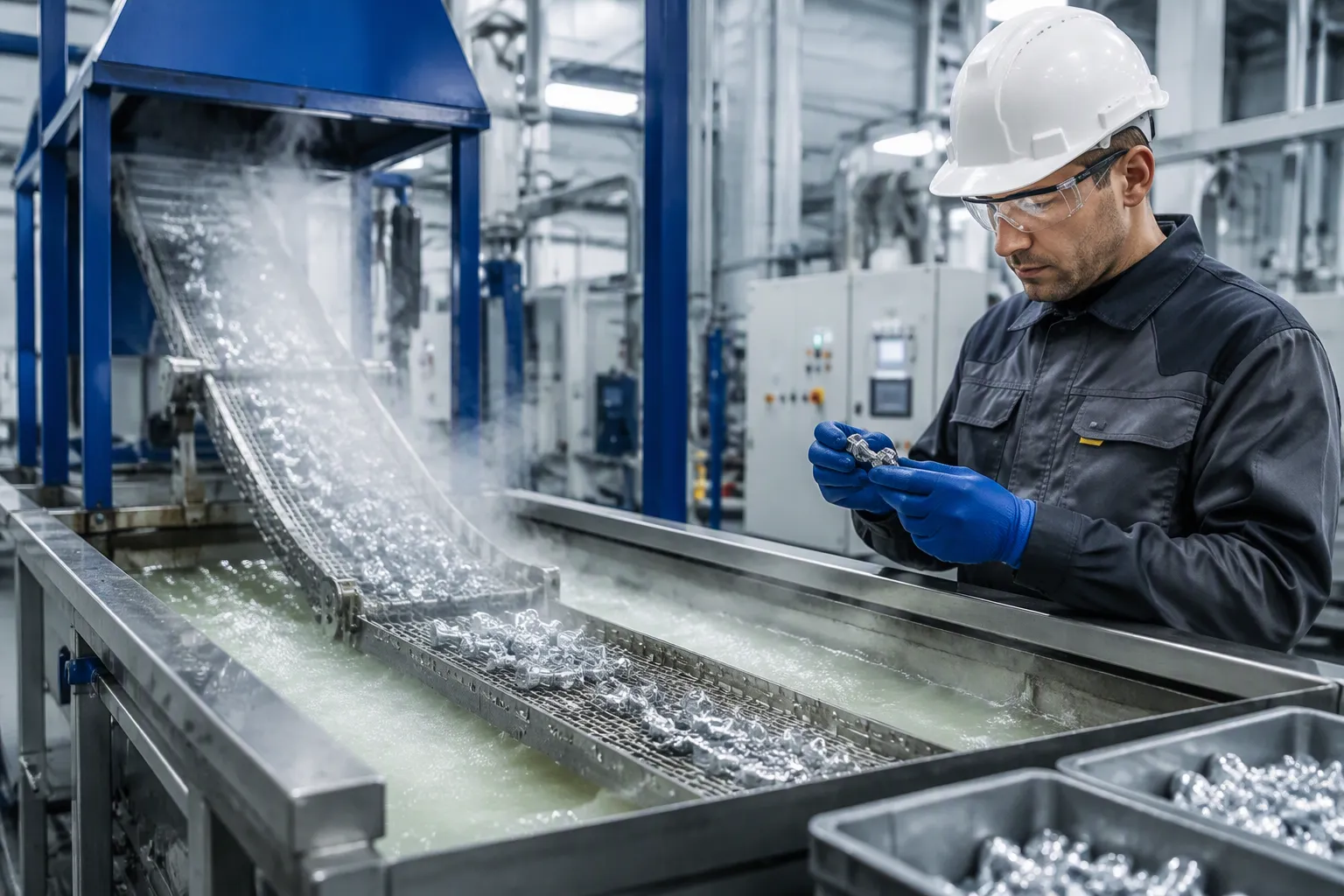
Uneven coating on small parts rarely comes from a single fault. Several conditions combine to produce it. Parts with complex geometry, such as nuts, bolts, and screws, trap zinc in threads and recesses. Thin sections cool faster than thick ones, so the zinc solidifies at different rates across a single workpiece. Poor drainage leaves pools of liquid zinc on one side of a part. Each of these conditions shifts coating thickness away from the target.
Manual dipping makes the problem worse. An operator lowers a basket into the bath by hand. The basket tilts, the dwell time varies, and the withdrawal speed changes from cycle to cycle. Small parts amplify every one of these variations because their surface area is large relative to their mass. A small change in dwell time moves the coating weight noticeably.
Small Parts Galvanizing Lines remove the human variable from the coating step. The line controls immersion depth, dwell time, and withdrawal speed for every batch. Each part sees the same thermal cycle. The result is a coating that stays within a narrow thickness band across the whole load.
Zinc Buildup and Ash Reduction
Zinc buildup and zinc ash share a common source: excess liquid zinc that leaves the bath and cools in the wrong place. Zinc that drips onto fixtures, conveyors, or the shop floor oxidizes and becomes ash. That ash consumes metal, demands removal, and adds cost to every batch.
The rotary galvanizing device on these lines addresses the problem at its root. It combines galvanizing and centrifugation in one unit. The device spins small parts immediately above the annular zinc pot right after dipping. Three benefits follow:
- · Integrated rotary spinners throw excess liquid zinc straight back into the molten bath rather than letting it cool and oxidize elsewhere.
- · By centrifuging surplus molten zinc directly into the annular zinc pot, the process avoids air exposure and removes intermediate transfers, which curtails zinc ash formation.
- · The rotary galvanizing machine spins small parts immediately above the annular zinc pot right after dipping, so excess liquid zinc is forced off the workpieces and falls straight back into the bath, recovering material and retaining heat.
The annular zinc pot supports hot-dip galvanizing at the traditional 450°C. That temperature suits small-part work well. It keeps the zinc fluid enough to drain cleanly from threads and holes, and it supports better coating quality than a cooler bath would deliver. The pot shape also fits the rotary device, so the whole coating stage works as one continuous unit. Material stays in the bath, heat stays in the system, and ash generation drops.
Preventing Distortion and Handling Damage
Why Small Parts Distort
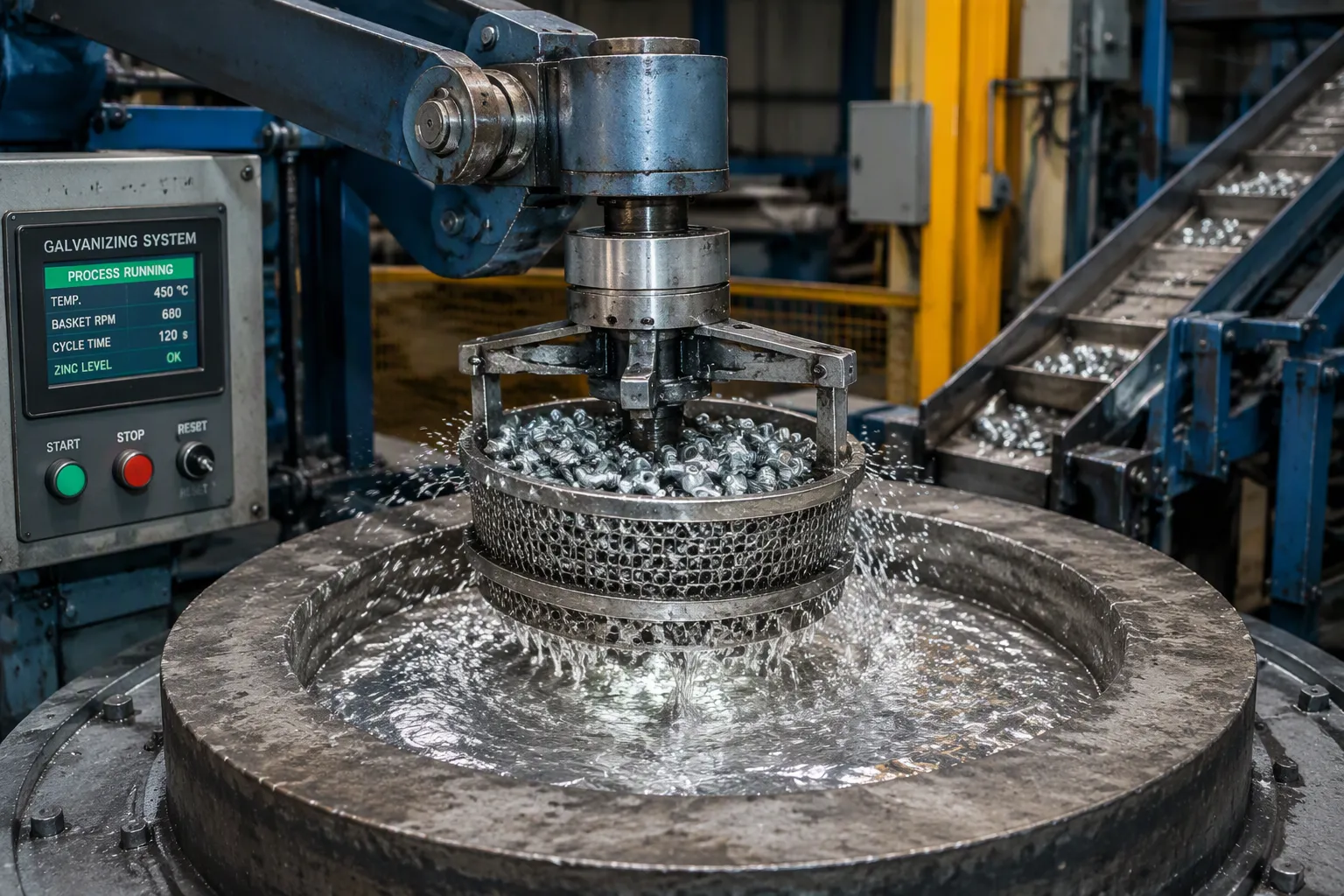
Distortion in small parts usually starts long before the zinc bath. Fasteners, brackets, and similar components carry locked-in stresses from the steel mill, from welding, from cold forming, and from hole punching. Heating the part to the galvanizing temperature releases those stresses. The part twists, bows, or pulls out of shape. Galvanizing exposes distortion rather than causing it, and that distinction matters for anyone tracing a defect back to its source. The defect appears at the galvanizing stage, but the cause sits upstream in fabrication.
Section thickness shapes the failure mode. Thin sections heat fast and cool fast, and their low stiffness cannot resist stress-relief forces. They dish, oil-can, wave at the edges, or twist. Thick sections heat slowly because of their thermal mass. At thin-to-thick joints, differential expansion concentrates stress and produces buckling, twisting, or weld cracking. A thin bracket with punched holes often shows both problems at once.
| Section type | Thermal behavior | Distortion mechanism |
| Thin sections (≤6 mm) | Rapid heating, quick expansion, fast cooling | Low section modulus cannot resist stress-relief forces; dishing, oil-canning, edge waviness, twisting |
| Thick sections | Slow heating due to thermal mass, extended hot time, slow cooling | Differential expansion at thin/thick joints concentrates stresses causing buckling, twisting, or weld cracking |
Cold working adds its own stress patterns. Punching and shearing create work-hardened, tensile-stressed zones at cut edges. Rolling and bending leave tension outside and compression inside. Riveting introduces circumferential tensile stress around holes. Straightening adds new residual stress through localized yielding. Thermal cutting processes such as plasma, laser, and oxy-fuel introduce locked-in stress. Welding sequence adds residual stress. Forced alignment during assembly locks in stress. Uneven heating and cooling during fabrication does the same. The zinc bath at roughly 450°C releases all of it at once.
Handling adds a second risk. Baskets that tilt during lifting shift the load. Parts collide during transfer. Coating chips at contact points. A part that survives the bath can still fail inspection after rough transport.
Gentler Handling Systems
Small Parts Galvanizing Lines reduce both stress-release damage and mechanical damage through controlled handling at every stage. The pre-treatment device uses a hexagonal drum combined with a gantry traveling trolley structure. This design delivers high pre-treatment efficiency and keeps part movement controlled rather than abrupt. The drum turns parts gently through cleaning and pre-treatment stages. The gantry trolley moves loads along a fixed path, so baskets do not swing or tilt unpredictably. Operators load the drum once, and the trolley carries it through each station in sequence. The result is a steadier rhythm through the line and fewer parts damaged before they reach the bath.
The post-treatment device addresses the damage that follows galvanizing. Freshly coated parts are soft and easy to mar. Violent collisions between workpieces chip and scratch the zinc layer. The post-treatment device minimizes those collisions, so parts leave the line with their coating intact. Parts arrive at packing in saleable condition.
Together, these systems protect the part from two directions. Controlled thermal exposure limits stress-relief distortion. Gentle mechanical handling limits impact damage. Rejects from both causes fall, and rework drops with them.
Cutting Rejection Rates
Common Sources of Rejection
Rejection in small-parts galvanizing traces back to a handful of repeatable causes. Flux problems rank first. Too-heavy flux application or slow withdrawal from the flux tank seals inner flux in place. Zinc then forms around the flux rather than beneath it, and uncoated spots appear. A degraded or contaminated flux bath applies unevenly and leaves inconsistent density or adhesion spots. Part geometry makes this worse. Tight internal angles, recesses, and restricted cavities trap flux and prevent complete volatilization.
Contact and touch marks rank second. Parts that touch each other in the zinc bath block molten zinc from the interface and leave uncoated areas. Freshly coated parts that rest on each other or contact hooks, chains, slings, or rack frames compress the soft zinc layer. Flat mating surfaces, closely spaced perforations, and interlocking geometries raise the risk further.
Severity decides the outcome. Small accessible inclusions and minor marks within specification limits, such as ASTM A123, may be repaired with zinc-rich paint, zinc-based solder, or cold-galvanizing compound. Large-area inclusions and interior flux deposits in hollow sections cannot be repaired and must be rejected outright.
In-Line Quality Control
Small Parts Galvanizing Lines move quality checks into the process itself. Controlled immersion depth, dwell time, and withdrawal speed give every batch the same thermal cycle, so coating thickness stays predictable. The rotary galvanizing device returns excess zinc to the pot instead of letting it cool on fixtures. The pre-treatment drum and gantry trolley keep parts separated and moving on a fixed path. The post-treatment device limits collisions that chip fresh coatings.
These controls catch defects at the source rather than at final inspection. Fewer parts reach the reject bin, and fewer need stripping and re-galvanizing. Repair work drops to the small, accessible defects that zinc-rich paint can handle.
Boosting Efficiency and Cost Savings
Throughput and Energy Gains
Automation ties every stage together. Loading, cleaning, pre-treatment, galvanizing, spinning, drying, cooling, and unloading run as one seamless operation. Operators no longer move baskets by hand between stations. Labor intensity falls, and productivity rises. Small Parts Galvanizing Lines turn a stop-start batch process into a steady flow.
The numbers show the shift clearly:
| Category | Metric | Automated / Continuous Line | Conventional / Batch Baseline |
| Throughput | Parts processed per hour | Thousands of parts per hour | Hundreds per batch |
| Throughput | Coating cycle time per lot | 30 minutes | 4 hours (8x faster) |
| Throughput | Parts per cycle | 10 to 100 kilograms per cycle | N/A |
| Energy | Heat loss | Lower heat loss from enclosed system cuts energy consumption | Higher heat loss |
| Energy | Zinc recovery | Rotary centrifuge recovers zinc, reducing heat loss and zinc ash generation | Zinc wasted, more ash generated |
Energy savings come from the same design. The enclosed system loses less heat to the surroundings. The rotary centrifuge recovers zinc instead of letting it oxidize as ash. Both effects cut consumption per part.
Automation replaces manual handling to save labor, the rotary centrifuge recovers zinc to reduce material waste, and the enclosed system’s lower heat loss cuts energy consumption — savings that offset the initial investment over time.
Less Rework and Waste
Rework starts with defects. Uneven coating, zinc buildup, and handling damage all send parts back for stripping and re-galvanizing. Each rework cycle consumes labor, energy, and zinc a second time. Small Parts Galvanizing Lines cut the defect sources at the process level. Controlled immersion and spinning keep coating uniform. Gentle drum and trolley handling limits impact damage. Fewer defects mean fewer parts enter the rework loop.
Waste falls on two fronts. Zinc ash drops because separated metal returns to the pot. Scrap drops because fewer parts fail final inspection. Automotive, construction, and manufacturing operations see the benefit in predictable output and lower cost per finished part.
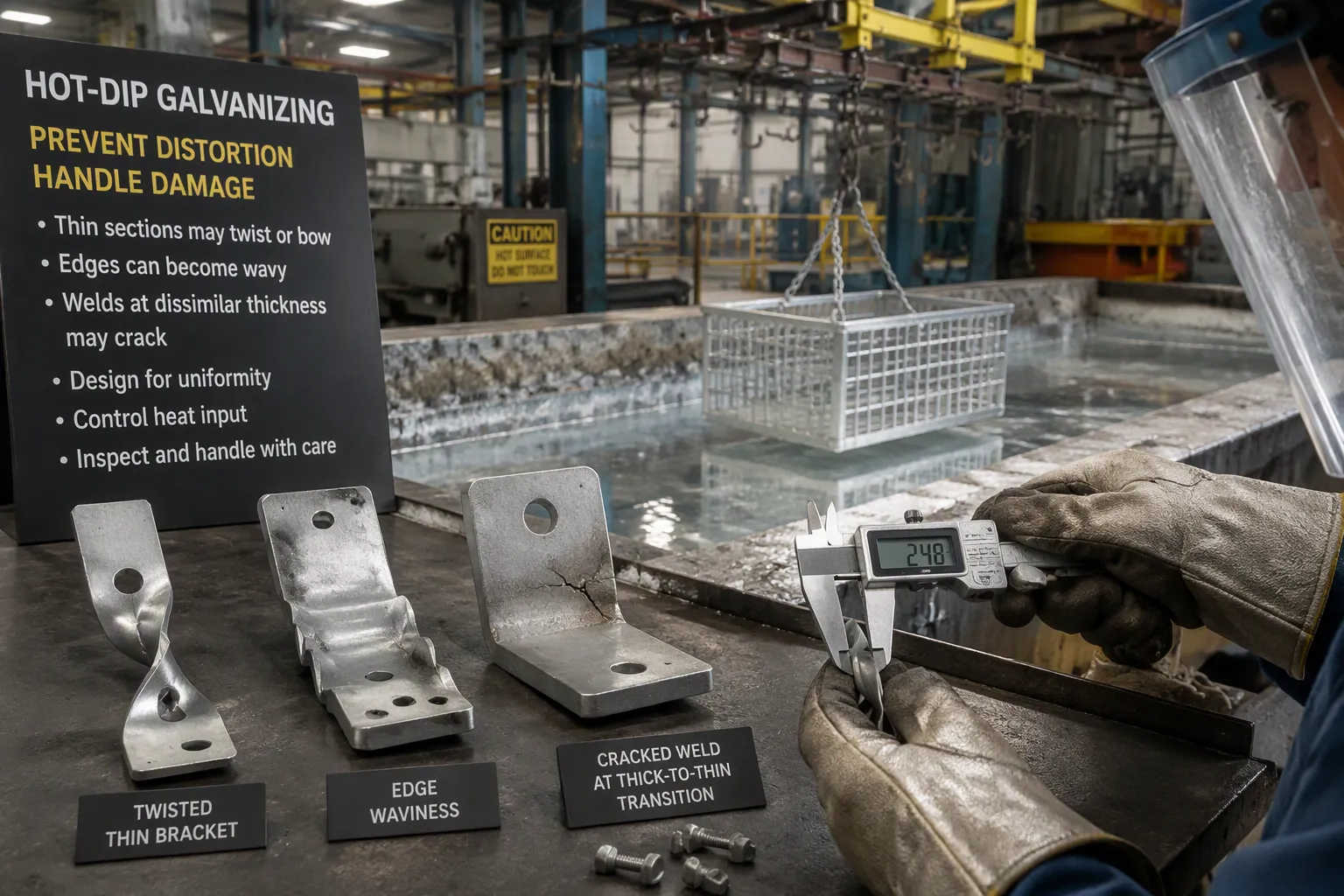
Small Parts Galvanizing Lines answer the common defects of small-part work with four linked solutions. Controlled immersion and spinning keep coating uniform and return excess zinc to the pot. Drum and trolley handling protect parts from distortion and impact damage. In-line checks catch defects at the source instead of at final inspection. Automation then lifts throughput and cuts labor, energy, and rework.
These features make the line a practical fit for fasteners, brackets, and similar components. Teams that adopt this approach can expect steadier coating quality, smoother output, and a lower cost per finished part as the process matures.
FAQ
Which parts suit a small parts galvanizing line?
The line handles nuts, bolts, screws, and other standard fasteners. Brackets and similar small components also fit well. These parts share a large surface area relative to their mass, so controlled dipping and spinning give them the most benefit.
What bath temperature does the line use?
The annular zinc pot runs at the traditional 450°C. That temperature keeps the zinc fluid enough to drain cleanly from threads and holes. It also supports better coating quality than a cooler bath would deliver.
How fast does the line process a batch?
The line moves thousands of parts per hour. A coating cycle takes about 30 minutes per lot, compared with roughly 4 hours for conventional batch work. Each cycle carries 10 to 100 kilograms of parts.
How does the line recover zinc?
The rotary galvanizing device spins parts directly above the pot after dipping. Separated liquid zinc falls straight back into the bath. This step recovers material, retains heat, and curbs zinc ash formation.
Can the line prevent distortion in thin parts?
The line cannot remove stresses that fabrication locked into a part. Controlled heating and gentle drum-and-trolley handling do limit the damage. Thin sections still need sensible design upstream, and the line keeps handling impact low.
Post time: Nov-05-2026